Consulting Business Taxes Explained (Beginner-Friendly Guide)
Introduction Taxes confuse most people. When you add a consulting business on top of that, it gets even more overwhelming….
Introduction
Taxes confuse most people. When you add a consulting business on top of that, it gets even more overwhelming. But here’s the truth: taxes for consultants aren’t as complicated as they seem once someone breaks them down properly. Whether you’re dealing with consulting business taxes for the first time or trying to make sense of what you actually owe, this guide covers it all in plain language.
You don’t need to become an accountant. You just need to understand the basics so you’re not caught off guard when tax season comes around. This guide explains everything in plain language, step by step.
Do Consulting Businesses Pay Taxes?
Yes, every consulting business pays taxes, no matter how small.
Whether you’re freelancing on the side or running a registered company, the money you earn from consulting is taxable income. The government counts it, and they expect a cut.
A lot of beginners think that if they’re just starting out or only earning a small amount, they don’t need to worry about taxes yet. That’s a common mistake that can cause real problems later.
The sooner you understand your tax situation, the better off you’ll be.
Types of Consulting Business Taxes
There isn’t just one tax you pay. There are several, and which ones apply to you depends on your location and business structure.
Income Tax for Consultants
This is the most straightforward one. Whatever profit your consulting business earns, a portion of that goes to the government as income tax.
The rate depends on how much you earn and which country you’re in. Most places use a tiered system: the more you earn, the higher the percentage you pay.
Self-Employment Tax
If you work for yourself as a consultant, you have no employer and no payroll; you’re responsible for self-employment tax.
When you’re an employee, your employer covers half of your social security and Medicare contributions. When you’re self-employed, you cover both halves yourself. In the US, that’s around 15.3% of your net earnings.
This one surprises a lot of new consultants. They budget for income tax but forget about self-employment tax entirely.
Sales Tax, VAT, and Tax on Consultancy Services
VAT for consulting services works differently from product-based VAT you’re charging it on your time and expertise rather than a physical good, which can affect how clients perceive your pricing, especially if they can’t reclaim it.
In the UK, if your revenue crosses £90,000, you must register for VAT and charge it on your invoices. In the US, sales tax rules for services vary by state. In Pakistan, sales tax on services is handled at the provincial level.
Not every consultant needs to charge this, but you do need to check if it applies to you.
Business Tax
If your consulting business is registered as a company like an LLC or a private limited company, it may pay corporate tax on its profits separately from your personal income tax.
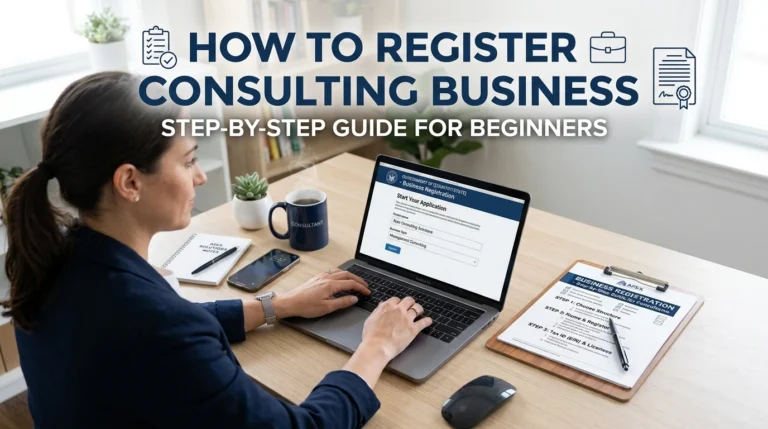
This is something to look into when you’re setting up your structure. Our guide on how to register a consulting business covers the different structures and how they affect what you owe.
How Consulting Business Taxes Work (Step by Step)
Here’s the basic flow so you can see the full picture.
Step 1: You earn money from clients. Every payment you receive from a client counts as business income.
Step 2: You deduct your business expenses. Not all of that income is taxable. You can subtract legitimate business expenses, things like software, internet, home office costs, travel for work, and professional tools. What’s left after that is your taxable profit.
Step 3: You calculate what you owe. Based on your taxable profit, you apply the relevant tax rates for your country. This includes income tax, self-employment tax if applicable, and any other business taxes.
Step 4: You file and pay. Most countries require you to file a tax return once a year. Some also require quarterly estimated payments throughout the year so you’re not hit with a huge bill in one go.
Step 5: You keep records. Every step along the way, you’re keeping receipts, invoices, and records that back up your numbers. More on this below.
Consulting Business Taxes by Country
Tax rules are different depending on where you live. Here’s a quick overview of how taxes for consultants work across the most common locations.
United States
In the US, consultants deal with federal income tax, state income tax (in most states), and self-employment tax.
You’re expected to pay estimated taxes four times a year in April, June, September, and January. Miss these and you could owe a penalty on top of what you already owe.
The IRS lets you deduct a wide range of business expenses, which can significantly reduce what you owe.
United Kingdom
In the UK, self-employed consultants pay income tax and national insurance contributions on their profits.
You file a self-assessment tax return each year, with the deadline in January for online submissions. If your revenue hits the VAT threshold (currently £90,000), you also register for VAT and start charging it on your invoices.
Canada
Canadian consultants pay federal and provincial income tax on their business profits.
If your revenue is over $30,000 in a 12-month period, you need to register for GST/HST (Goods and Services Tax / Harmonized Sales Tax) and charge it to clients.
The Canada Revenue Agency (CRA) is the body that handles all of this.
Pakistan
In Pakistan, consulting income is taxable under the Income Tax Ordinance 2001, managed by the Federal Board of Revenue (FBR).
Consultants need to file an annual income tax return. If you provide services as a registered business, you may also deal with sales tax on services, which is handled by the provincial revenue authority depending on your location (FBR, SRB, or PRA).
If you’re just starting out in Pakistan, our guide on how to register a consulting business walks through the registration process with SECP.
Common Tax Mistakes Beginners Make
Not setting money aside as you earn. Taxes don’t get deducted automatically when you’re self-employed. You need to save a portion of every payment you receive. A good rule of thumb is to set aside 25–30% of your income for taxes.
Missing quarterly payment deadlines. In the US especially, missing estimated tax payments means penalties on top of what you owe. Check your country’s schedule and mark the dates.
Not tracking expenses properly. Every deductible expense you miss means you’re paying tax on money you didn’t need to. Keep receipts for everything business-related.
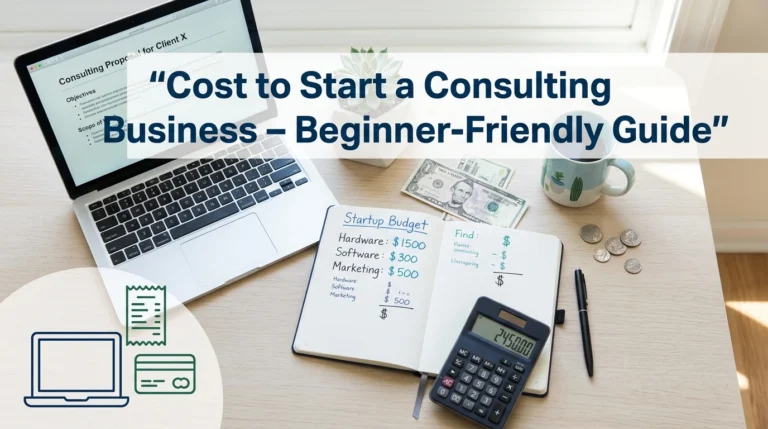
Mixing personal and business finances. When your personal spending and business income are in the same account, it’s hard to know what you actually earned. Open a separate business account from day one. You can read more about why in our guide on the cost to start a consulting business.
Ignoring taxes until the deadline. Consulting business taxes isn’t something you deal with once a year at the last minute. You need to track things throughout the year.
How to Legally Reduce Your Tax Bill
There are completely legal ways to pay less tax as a consultant. The key is knowing what you can deduct.
Common deductible expenses for consultants include:
- Home office costs (if you work from home, a portion of your rent or mortgage and utilities)
- Internet and phone bills used for work
- Software and subscriptions you use for your business
- Equipment laptop, monitor, desk
- Professional development courses, books, training
- Travel costs for client meetings
- Accountant and legal fees
The more accurately you track these, the lower your taxable profit and the less you pay.
Also, the business structure you choose affects how you’re taxed. Running as an LLC or limited company in many countries means you can pay yourself a salary and take dividends, which can reduce your overall tax rate. Check the legal requirements for consulting businesses in your country to understand which structure makes sense.
Record Keeping and Invoices
Good records are the foundation of clean taxes. Without them, you can’t prove your income, your expenses, or your deductions.
Here’s what you should keep track of:
- Every invoice you send to a client
- Every payment you receive
- All business-related receipts and expenses
- Bank statements for your business account
- Any contracts or agreements with clients
Use a simple spreadsheet or an accounting tool like Wave (free), FreshBooks, or QuickBooks. You don’t need anything complicated; you just need to stay consistent.
Most countries require you to keep financial records for at least five to seven years.
When to Hire an Accountant
You don’t need an accountant from day one, but there are clear signs that it’s time to get one.
Hire an accountant when:
- You’re not sure what taxes apply to you
- Your income is growing and you want to reduce your tax bill legally
- You’re setting up a company structure instead of working as a sole trader
- You’ve missed a filing deadline and need help sorting it out
- Tax season is coming and you’re genuinely confused
A good accountant pays for themselves. They find deductions you’d miss, keep you out of trouble with tax authorities, and save you hours of stress.
If you’re just starting out and earning a small amount, a free consultation with a local accountant is often enough to point you in the right direction.
Conclusion
Consulting business taxes doesn’t have to be overwhelming. Once you understand the basics of what you owe, when you pay, and what you can deduct, it becomes a manageable part of running your business.
Start simple: open a business bank account, track your income and expenses from day one, and set aside a portion of every payment for taxes.
If you haven’t set up your business yet, start with our guide on how to start a consulting business. From there, registering properly and understanding your tax obligations go hand in hand.
The earlier you get organized with this, the less stress you’ll have later on.
Do I need to pay taxes if my consulting business is just starting out?
Yes. As soon as you earn income from consulting, it’s taxable even if you’re just starting. There’s no official “grace period.” The threshold for filing varies by country, but it’s best to track everything from your first payment.
How much tax does a consultant typically pay?
It depends on your income level and country. As a rough estimate, many self-employed consultants in the US pay around 25-35% in combined income and self-employment tax. In the UK and Canada, it varies by income bracket. Setting aside 25-30% of your earnings is a safe starting point.
Can I deduct my home office as a consultant?
Yes, in most countries. If you work from home, you can deduct a portion of your rent or mortgage, utilities, and internet costs that relate to your workspace. The rules vary slightly by country, so check with a local accountant to get the exact formula.
What’s the difference between income tax and self-employment tax?
Income tax is based on your overall earnings. Self-employment tax specifically covers your social security and healthcare contributions, and when you’re self-employed, you pay both the employee and employer portions yourself. In the US, this adds up to 15.3% of your net income.
Do I need to charge VAT or sales tax on my consulting services?
Not necessarily. It depends on your country and your revenue level. In the UK, you only register for VAT once you cross the £90,000 threshold. In the US, rules vary by state. In Pakistan, it depends on your province and registration status. Check your local requirements before you start sending invoices.
How do I file consulting business taxes if I’ve never done it before?
The easiest route is to use accounting software to track your income and expenses throughout the year and then either file yourself using your government’s online portal or hire an accountant to handle the filing. Most first-time filers find that one session with an accountant is enough to understand the process going forward.
Is VAT or sales tax always charged on consulting services?
Not automatically. Whether VAT for consulting services applies depends on your country, your revenue level, and sometimes the type of advice you provide. In the UK, you only charge VAT once you cross the £90,000 threshold. In the US, the tax on consultancy services varies significantly by state. Some states exempt professional services entirely, while others tax them. In Canada, GST/HST applies once you pass the $30,000 revenue mark. Always confirm the rules in your specific location before your first invoice goes out.
How to pay taxes if you are a consultant?
Paying starts with setting money aside as you earn it, since taxes are not deducted automatically when you are self-employed. In the US, you pay estimated taxes four times a year, in April, June, September, and January, and most countries also require a tax return once a year. Keep records of every invoice and payment so the amount you owe is easy to calculate.