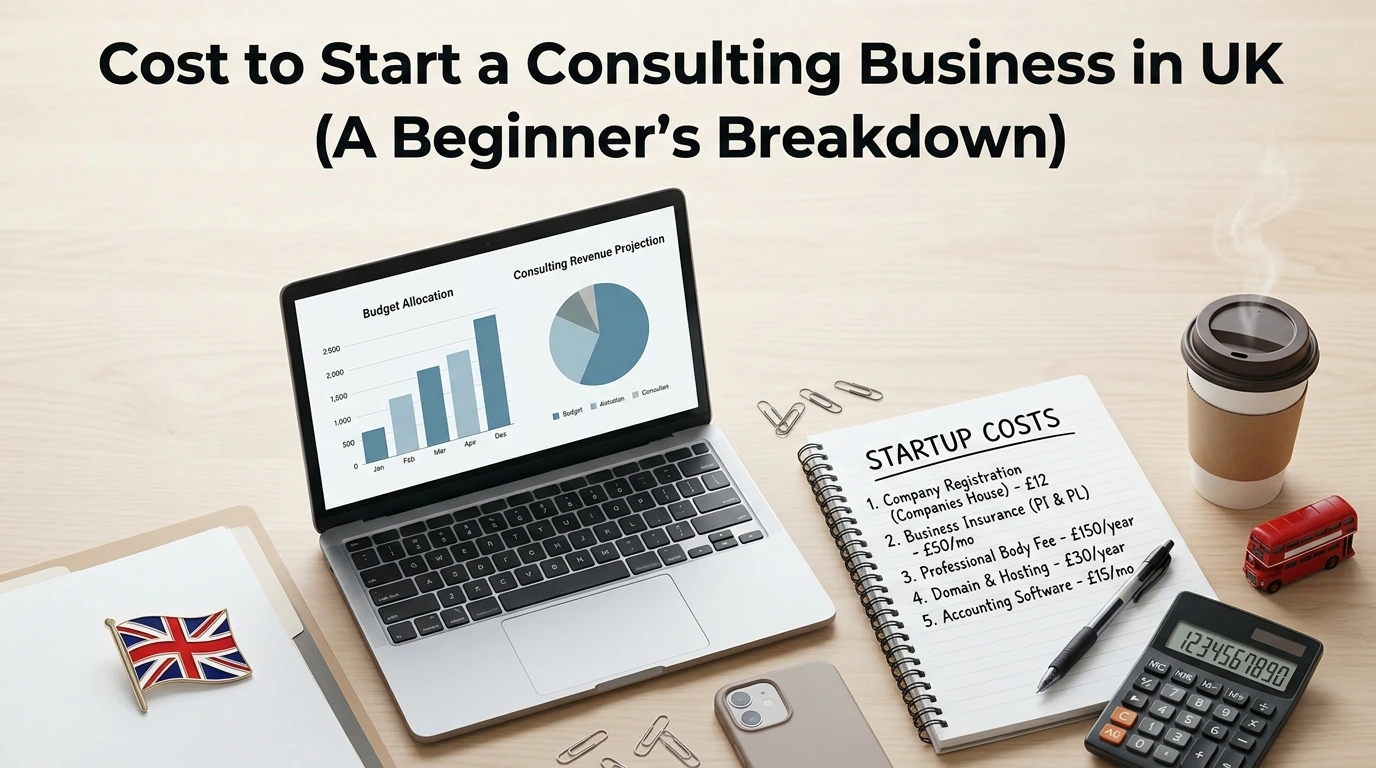
Cost to Start a Consulting Business in UK (A Beginner’s Breakdown)

Introduction
Starting a consulting business in the UK sounds exciting until you sit down and try to figure out how much money you actually need. Most beginners either overthink the budget and delay starting, or they jump in without thinking and run out of money quickly.
The truth is, the cost to start a consulting business in UK can be surprisingly low if you plan smart from the beginning. Some people have launched with less than £500. Others spend £5,000 or more. The difference usually comes down to choices, not requirements.
This guide will walk you through every cost you need to know about clearly, honestly, and without any filler. By the end, you’ll have a clear picture of what it actually takes to get started.
Can You Start a Consulting Business in UK With a Low Budget?
Yes, absolutely. The UK is one of the easier places in the world to start a service business with minimal capital. Unlike product businesses, consulting doesn’t require stock, a warehouse, or heavy equipment. Your main asset is knowledge, and you already have that.
The minimum startup cost for most consultants falls somewhere between £200 and £800. That covers the basics: registering your business, a simple website, and a few tools to get organized. If you already have a laptop and a phone, you’re most of the way there.
That said, spending a bit more upfront on the right things like a clean website and professional email can make a real difference in how clients perceive you.
Basic Startup Costs in UK: An Overview
Before going through each cost in detail, here’s a rough sense of what most beginners spend:
Business registration typically costs between £12 and £50 depending on how you register. A simple domain name runs around £10 to £15 per year. Web hosting costs between £3 and £15 per month. A basic logo and branding can cost anywhere from £0 (DIY) to £300 if you hire someone.
Software subscriptions for things like accounting or project management usually run £10 to £50 per month. And if you’re working from home, your office setup costs very little, maybe £0 to £200 if you need a new chair or monitor.
In total, most first-time consultants spend between £300 and £1,500 in their first few months. That’s a wide range, but the good news is you control most of it.
Business Registration Costs
The first official step is registering your business. In the UK, you have a few options.
Sole trader registration is free. You simply register with HMRC for self-assessment, and that’s it. This is the cheapest and quickest route, and many consultants start this way.
Limited company registration costs £12 if you do it online through Companies House. It takes about 24 hours. Some people use a formation agent to handle the paperwork for them, which costs between £20 and £50. If you want a registered office address service (useful if you work from home and don’t want your home address on public records), that costs around £50 to £150 per year.
For most beginners, going sole proprietor first makes sense. As your income grows, you can always switch to a limited company later. If you want a full picture of the setup process, the main guide on how to start a consulting business in UK covers the legal structure decision in much more detail.
Website and Domain Costs
You need a professional online presence. Not a perfect one just a clean, clear one. Clients will look you up, and a decent website builds immediate trust.
A domain name typically costs £10 to £15 per year. Stick with a .co.uk or .com; both work well in the UK market.
Web hosting runs between £3 and £15 per month, depending on the provider. SiteGround, Bluehost, and Krystal are popular options in the UK.
A basic WordPress website can be built by yourself for almost nothing if you’re willing to learn. Paid themes that look professional cost around £30 to £80 as a one-time fee. If you’d rather hire someone to build it, a simple five-page website from a freelancer typically costs £300 to £800.
You’ll also want a professional email address, something like yourname@yourcompany.com, rather than a Gmail account. Google Workspace offers this for around £5 per month.
In total, expect to spend £100 to £900 on your website depending on whether you DIY or hire help.
Marketing and Branding Costs
Many beginners overspend on marketing before they even have their first client. That’s a mistake. Early on, most of your clients will come from your existing network, people you already know.
Branding, meaning your logo, colors, and basic visual identity, matters, but it doesn’t need to be expensive at the start. Tools like Canva let you create a basic logo for free. If you want something more polished, sites like Fiverr have designers who create logos for £30 to £100.
Business cards are cheap around £15 to £30 for a decent batch from Vistaprint or Moo. They’re still useful for in-person networking.
Paid advertising, like Google Ads or LinkedIn ads, is generally not something beginners need right away. Organic networking and word of mouth are far more effective when you’re starting out.
If you do want to invest in content marketing, write articles, or grow a LinkedIn presence,, the cost is mainly your time, not your money. This is one of the most cost-effective ways to attract consulting clients over the long term.
Budget around £50 to £300 for early-stage marketing if you’re being sensible.
Software and Tools Costs
Running a consulting business doesn’t require a lot of software, but a few tools make life significantly easier.
Accounting software is important from day one. FreeAgent and QuickBooks are popular in the UK, typically costing £12 to £30 per month. Alternatively, Wave is free and works well for sole traders.
Proposal and contract tools like Bonsai or PandaDoc help you send professional-looking proposals and contracts. These usually cost £15 to £30 per month. In the beginning, a well-designed Word or PDF template can do the same job for free.
Scheduling tools like Calendly make it easy for clients to book calls without back-and-forth emails. The free plan is enough for most beginners.
Communication tools like Zoom are free up to 40-minute meetings, which is usually fine when you’re getting started.
Total software costs for a new consultant: roughly £20 to £80 per month, depending on what you actually need.
Home Office vs Rented Office Costs
This is one of the biggest cost decisions you’ll make. And for most beginners, the answer is simple: start from home.
A home office has almost no added cost. You’re already paying rent or a mortgage. If you need to claim business expenses, HMRC allows you to claim a flat rate of £6 per week for working from home.
A rented office or coworking space is a different story. A hot desk at a London coworking space costs around £200 to £400 per month. Private offices can run £500 to over £1,000 per month. Outside London, prices are lower. Coworking in cities like Manchester, Leeds, or Birmingham typically runs £100 to £250 per month.
Unless you genuinely need a professional meeting space or find it impossible to focus at home, there’s no rush to rent an office. Many established consultants work entirely from home throughout their careers.
Hidden Costs Beginners Forget
A few costs tend to catch new consultants off guard.
Professional indemnity insurance is something most consultants need, especially if you’re giving advice that could affect a client’s business or finances. Policies start at around £150 to £300 per year for basic coverage.
Accountancy fees are another one. Even if you use accounting software, many consultants hire an accountant for their annual tax return. This typically costs £300 to £600 per year for a sole trader.
HMRC self-assessment itself is free, but you’ll owe tax on your profits. Make sure you’re setting aside roughly 20 to 30% of your income for the tax bill not doing this is one of the most common early mistakes.
Professional memberships or certifications can be valuable in certain fields like management consulting, HR, and finance, but they’re optional costs and not something every beginner needs right away.
Ways to Reduce Startup Costs
Getting started lean is a smart move, especially before you’ve landed your first paying client.
Build your website yourself using a free or low-cost WordPress theme. Use free accounting tools like Wave until your revenue justifies a paid plan. Handle your own social media rather than paying someone else. Use your existing laptop and phone rather than buying new equipment.
Another practical approach: only spend money on something when you have a clear reason to. Many consultants have wasted hundreds on tools they never used. Buy the minimum and add things as you actually need them.
Common Money Mistakes Beginners Make
Spending on branding before finding clients is one of the most common errors. A £500 logo doesn’t get you clients relationships do.
Signing up for too many subscriptions is another one. Monthly costs of £10 here and £30 there add up fast, and most of them aren’t necessary in the early months.
Forgetting to save for taxes is perhaps the most financially painful mistake. Set aside money every month as you earn it, not at the end of the year when the bill arrives.
Paying for advertising before knowing your ideal client is also a common waste. It’s very hard to run effective ads without a clear picture of who you’re trying to reach and what problem you solve for them.
Tips Before Spending Money on Your Consulting Business
Spend a few hours planning before opening your wallet. Know who your clients are, what service you’re offering, and what you’ll charge. That clarity saves money.
Talk to a few potential clients before building anything. Even informal conversations will tell you whether your service idea has demand.
Get your first client before you worry about a perfect website. Many consultants secure their first project through a LinkedIn message or a phone call no fancy website needed.
Once you’ve validated your idea and started earning, then invest more in tools, branding, and infrastructure. That order matters.
For a full step-by-step breakdown of how to go from idea to registered business to first client, the main guide on how to start a consulting business in UK is worth reading alongside this one.
Conclusion
The cost to start a consulting business in UK is genuinely accessible for most people. You don’t need thousands of pounds to get started. You need a clear head, a practical plan, and a willingness to start small.
Register your business, set up a simple website, get the right tools, protect yourself with basic insurance, and keep your early costs tight. Focus your energy on building relationships and landing your first clients that’s what actually moves the needle.
Money spent before you have clients is a cost. Money spent after you have clients is an investment. Keep that difference in mind and you’ll start on solid ground.
FAQs
How much does it cost to start a consulting business in UK?
Most beginners spend between £300 and £1,500 in their first few months. This covers business registration, a basic website, a domain, email, and essential tools. The cost can be lower if you start as a sole trader and build your website yourself.
Do I need to register a limited company to consult in the UK?
No. Many consultants start as sole traders, which are free to register. You simply notify HMRC and start trading. A limited company costs £12 to register online and offers certain tax and liability advantages, but it’s not a requirement to begin.
Is professional indemnity insurance required for consultants in the UK?
It’s not legally required in most cases, but it’s strongly recommended. If a client claims your advice caused them financial loss, indemnity insurance protects you. Basic policies start at around £150 to £300 per year.
Can I run a consulting business from home in the UK?
Yes. Working from home is completely legitimate and very common among consultants. You can meet clients over video call, rent a meeting room by the hour when needed, and claim a proportion of your home costs as a business expense.
How long does it take to start earning from a consulting business in the UK?
It varies widely. Some people land their first client within a week by reaching out to their existing network. Others take two to three months. The key factor is usually how actively you’re talking to potential clients, not how polished your website or branding is.