AI Consulting Business Ideas: How to Build

Businesses are under simultaneous pressure to adopt AI tools and to avoid costly mistakes in that adoption. The pressure comes from multiple directions: competitive benchmarking, investor expectations, operational efficiency goals, and the growing volume of AI-specific regulatory frameworks emerging in the United States, European Union, and United Kingdom.
Most small and mid-sized organizations do not have data scientists, machine learning engineers, or AI governance specialists on staff. They need outside expertise to navigate vendor selection, workflow integration, staff training, data readiness, and risk assessment.
The consulting opportunity is not primarily about building AI systems. It is about helping organizations make better decisions about AI, which is a far more accessible entry point for most professionals.
AI Consulting Business Ideas Worth Pursuing
AI Strategy Consulting
AI strategy consulting helps organizations understand where artificial intelligence can realistically create value in their business and where it cannot. This is an advisory-focused engagement that does not require deep technical implementation skills.
AI strategy consultants conduct internal assessments, evaluate current workflows for automation or augmentation potential, and produce roadmaps that sequence AI adoption according to organizational readiness, available resources, and expected return.
This niche is well suited to professionals with backgrounds in management consulting, business analysis, or technology strategy. Technical depth helps but is not required if the consultant focuses on decision-making frameworks rather than implementation.
Typical deliverables include AI readiness assessments, opportunity matrices, vendor shortlists, and phased implementation roadmaps. Engagements commonly range from two weeks to three months and are priced as projects rather than hourly arrangements.
Generative AI Implementation Consulting
Generative AI, including large language models such as GPT-4, Claude, and Gemini, has created a distinct implementation consulting niche. Businesses want to use these tools for content production, customer communication, internal knowledge management, code generation, and research acceleration, but most teams do not know how to configure, prompt, integrate, or govern them effectively.
Generative AI implementation consultants help organizations select the right tools, build prompt libraries, integrate AI into existing workflows using platforms such as Zapier or Make, and establish usage policies that protect sensitive data.
This niche does not require a software development background for most client engagements. Strong familiarity with current AI platforms, practical experience building AI-assisted workflows, and the ability to translate that knowledge into operational guidance are the core competencies.
AI Automation Consulting
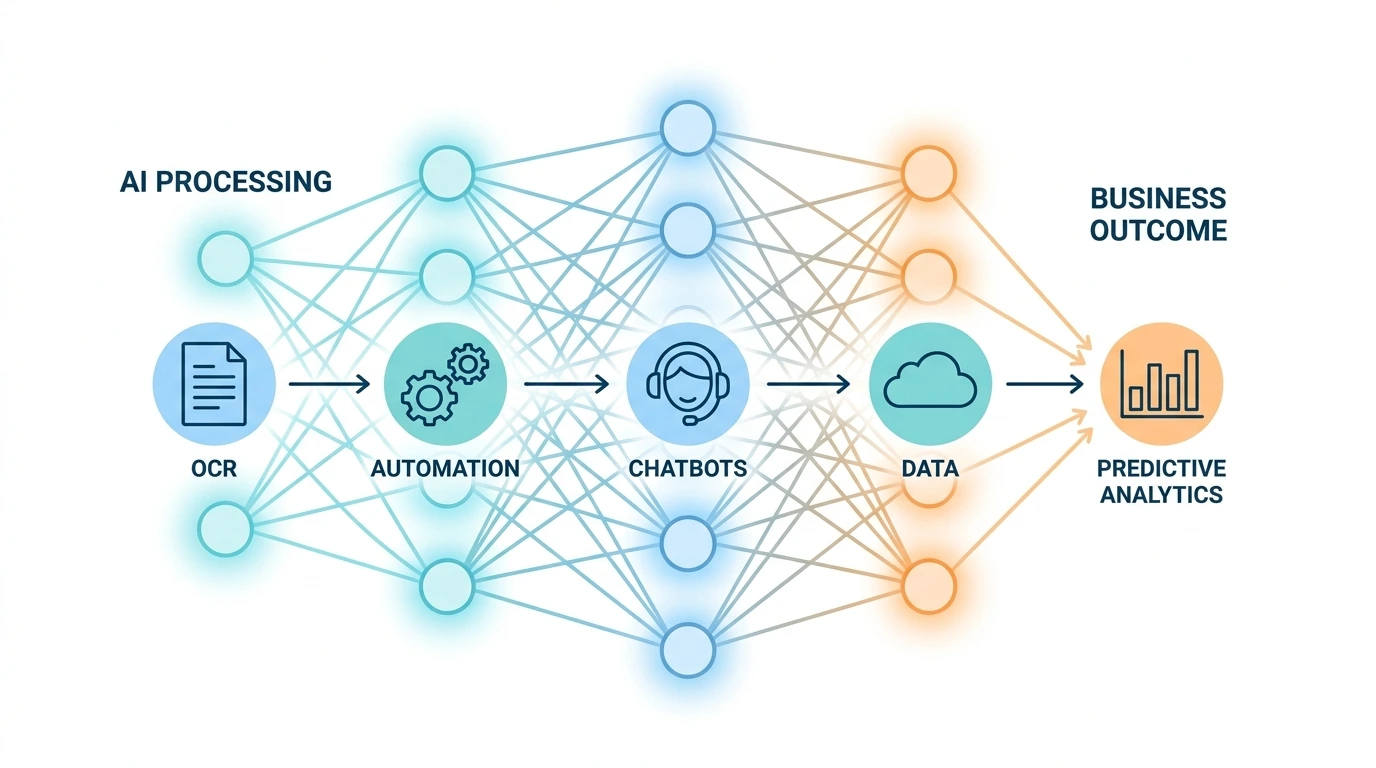
AI automation consulting focuses specifically on using artificial intelligence to reduce manual work in business processes. This is distinct from traditional process automation in that AI-powered automation can handle unstructured data, make judgment-based decisions, and adapt to variable inputs, which older rule-based systems could not.
AI automation consultants map existing workflows, identify repetitive or judgment-intensive tasks that AI tools can perform, design automated systems using platforms such as n8n, Make, or custom API integrations, and measure the time and cost impact of those changes.
This niche sits at the intersection of operations consulting and technology consulting. It appeals to businesses in marketing, legal services, finance, customer support, and operations virtually any function with repetitive knowledge work.
AI Sales and Marketing Consulting
AI has meaningfully changed what is possible in sales and marketing operations. AI tools now handle personalized email sequencing, lead scoring, content generation, advertising creative testing, customer segmentation, and predictive pipeline analysis.
AI sales and marketing consultants help businesses implement and optimize these tools within platforms such as HubSpot, Salesforce, or standalone AI tools. They also help teams understand how to review AI outputs, maintain quality, and preserve brand consistency as AI takes on greater content production responsibilities.
This niche suits professionals with a background in digital marketing, growth marketing, or revenue operations who have invested in understanding AI tool capabilities.
AI Data Strategy Consulting
Most businesses have more data than they use effectively, and many want to use AI to extract value from that data. AI data strategy consultants assess existing data infrastructure, evaluate data quality, identify gaps, and recommend systems that enable AI tools to function reliably.
This is a technically adjacent niche that suits professionals with backgrounds in data analytics, business intelligence, or database management. Engagements often precede AI implementation projects and are scoped as assessments or strategic planning exercises.
Common client concerns include understanding which data is needed to train or fine-tune AI models, how to store and manage data compliantly, and how to build internal data pipelines that keep AI systems accurate over time.
AI Compliance and Governance Consulting
As AI regulation develops, organizations need guidance on responsible AI use, especially in regulated industries such as healthcare, financial services, legal services, and education. AI compliance consultants help organizations understand applicable regulatory frameworks, assess their AI systems against those requirements, and design governance policies.
The EU AI Act, U.S. executive orders on AI, and sector-specific guidance from regulators such as the FTC, FDA, and financial regulatory bodies are creating a growing demand for advisors who understand both the technology and the legal context surrounding it.
This niche suits attorneys, compliance professionals, and policy specialists who have invested in understanding how AI systems function and where they introduce regulatory risk.
AI Training and Enablement Consulting
One of the most consistent AI consulting needs is workforce enablement, helping teams learn how to use AI tools effectively. Many organizations have purchased AI software subscriptions and seen minimal adoption because employees were not trained, did not trust the tools, or did not understand how to apply them to their actual work.
AI training consultants design and deliver workshops, develop prompt engineering guides, create tool-specific training curricula, and build internal AI literacy programs. This niche is highly accessible to consultants with strong teaching and communication skills alongside practical AI tool experience.
Engagements range from single-day workshops to multi-month learning program deployments. Larger organizations often purchase this as a recurring service as their AI tool stack evolves.
AI for Small Business Consulting
Small businesses represent an underserved segment within the AI consulting market. Most AI vendors and consulting firms focus on enterprise clients. Yet small business owners have real operational needs: automating customer communication, managing scheduling, generating marketing content, and analyzing sales data and limited time to research the best tools.
AI for small business consultants specializes in identifying practical, affordable AI solutions appropriate for organizations without dedicated IT departments. Engagements are typically shorter, priced accessibly, and focused on fast time-to-value.
This niche works well as a volume practice, with many small engagements rather than a few large retainers, and is highly compatible with a local or community-based business development approach.
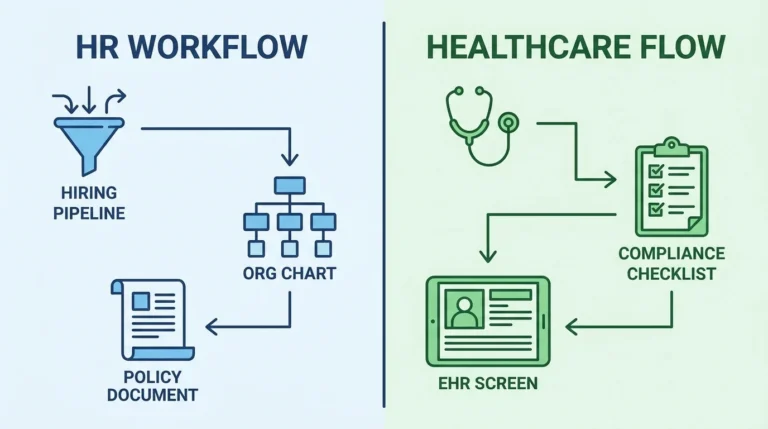
AI for HR and Recruitment Consulting
Human resources functions are among the most active early adopters of AI tools, particularly for recruitment, onboarding, and performance management. AI tools now assist with job description generation, resume screening, candidate communication, onboarding document creation, and employee survey analysis.
AI HR consultants help organizations select and implement these tools while managing risk around bias, compliance, and data privacy. They also help HR teams develop policies for responsible AI use in hiring, an increasingly regulated area in several U.S. states and internationally.
This niche suits HR professionals who have maintained close awareness of AI tool development in the people operations space.
Industry-Specific AI Consulting
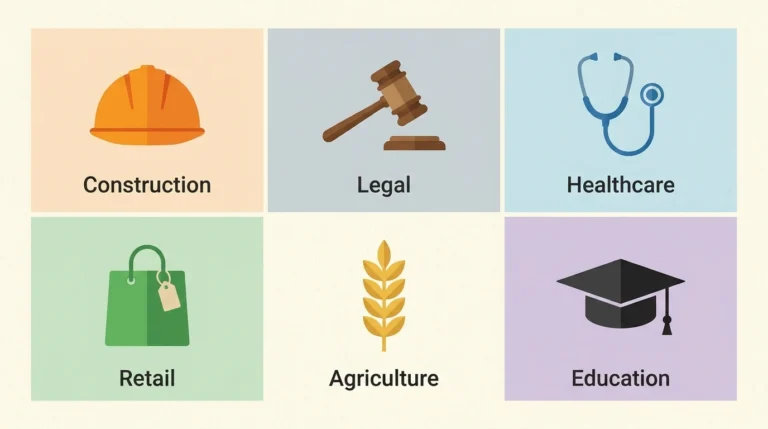
Rather than positioning themselves as general AI consultants, many practitioners build stronger market positions by specializing in AI adoption for a specific industry: healthcare, legal, real estate, manufacturing, financial services, or retail.
Industry-specific AI consultants understand the regulatory environment, operational workflows, and technology infrastructure of their chosen sector. That contextual knowledge allows them to provide more relevant guidance than a generalist can offer and commands higher fees accordingly.
An industry specialization also makes client acquisition more efficient. A healthcare AI consultant can focus marketing efforts on medical conferences, healthcare trade publications, and clinical technology associations rather than competing across every sector simultaneously.
How to Position an AI Consulting Practice
Positioning in AI consulting is critical because the field is growing quickly and the noise level is high. A clear positioning statement answers three questions: who you serve, what specific problem you solve, and what makes your approach distinctive.
Avoid positioning as an “AI consultant” without further qualification. The most successful AI consulting practices are positioned around a specific service type, industry vertical, or business function ideally, or both.
Building a public presence through LinkedIn content, speaking at industry events, contributing to trade publications, and demonstrating practical AI knowledge through case studies and published examples significantly shortens the client acquisition cycle.
What Clients Expect From AI Consultants
Clients hiring AI consultants want clear, practical guidance, not theoretical explanations of how AI works. They expect consultants to understand their business context, recommend solutions that fit their actual resources and team capabilities, and produce measurable results within a defined timeframe.
The AI consultants who build strong reputations are those who set realistic expectations, deliver what they promise, and avoid overpromising outcomes that AI tools cannot reliably produce. If you read 20+ consulting business ideas, then read our consulting business ideas.
Frequently Asked Questions
Do I need a technical background to become an AI consultant?
Not necessarily. Many AI consulting niches, strategy, training, governance, and small business implementation, require strong practical knowledge of AI tools and business acumen rather than machine learning engineering skills. Technical consulting niches such as custom model development or AI data infrastructure do require deeper technical expertise.
How much do AI consultants charge?
Rates vary significantly by niche and experience. Strategy and governance consultants typically charge $150 to $400 per hour or equivalent project rates. Implementation consultants range from $100 to $300 per hour. Training and enablement work is often packaged as a fixed-price program. Industry-specific consultants with deep domain expertise command the highest rates.
How do I get my first AI consulting client?
Start with your existing professional network. Identify organizations in your current or previous industry that are actively trying to use AI but lack internal guidance. Offer a focused discovery session or assessment at a reduced rate to demonstrate value. Use that first engagement to generate a case study and referrals.
What certifications help in AI consulting?
Certifications from major AI platform providers, such as Microsoft AI-900, Google Professional Machine Learning Engineer, AWS Certified Machine Learning add credibility, particularly in technical niches. Coursera, Deep Learning. AI and similar platforms offer practical AI education that many consultants use to accelerate their knowledge development.
Is AI consulting a long-term business opportunity?
AI adoption is at an early stage relative to its eventual market penetration. Demand for AI consulting is expected to grow significantly over the next five to ten years as more organizations move from experimentation to systematic deployment. Consultants who build genuine expertise and industry reputation during this early period are well positioned for long-term practice growth.