Consulting Business Ideas: 20+ Profitable Niches

Starting a consulting business is one of the most accessible paths to self-employment. The barrier to entry is low, startup costs are minimal, and the demand for specialized knowledge continues to grow across every industry.
But choosing the right niche matters. The consulting businesses that succeed long-term are built around specific expertise, clear target audiences, and a defined service model, not generic advice.
This guide covers the most profitable consulting business ideas available today, what each niche involves, and how to evaluate which opportunity fits your background and goals.
What Is a Consulting Business
A consulting business is a professional service where an individual or firm provides expert advice, strategy, or implementation support to clients in exchange for a fee. Clients pay for knowledge they do not have internally or for an outside perspective they cannot generate themselves.
Consulting businesses typically operate in one of three models:
Hourly consulting: clients pay for time spent advising or analyzing.
Project-based consulting: a flat fee for delivering a defined outcome.
Retainer consulting: a monthly fee for ongoing availability and support.
Most successful consultants eventually combine these models depending on client type and engagement scope.
Why Consulting Remains One of the Best Business Models
Consulting works because knowledge asymmetry exists in every market. Businesses routinely lack expertise in areas critical to their growth technology, compliance, marketing, finance, operations, and more.
Rather than hiring full-time specialists for every function, companies engage consultants to fill those gaps on demand. This arrangement benefits both parties. The business gets expert input without a permanent payroll commitment. The consultant builds a sustainable income from multiple clients simultaneously.
Several structural advantages make consulting an attractive business model:
Low startup cost. Most consulting businesses require a laptop, a reliable internet connection, and a professional presence nothing more.
High income ceiling. Experienced consultants in technical or regulatory niches routinely earn $150 to $500 per hour or more.
Location flexibility. Most consulting work can be performed remotely, which expands the potential client base significantly.
Scalability. A solo consultant can eventually build an agency, hire subcontractors, or productize their services into courses, templates, and group programs.
How to Choose the Right Consulting Niche
Choosing a consulting niche should be based on three factors working together: existing expertise, market demand, and willingness to serve a specific audience consistently.
Expertise is the most important starting point. Clients hire consultants to solve problems they cannot solve themselves. If your knowledge is not demonstrably deeper than the average client’s, the engagement will collapse quickly.
Market demand ensures that businesses are actively spending money in the niche. A niche can be intellectually interesting but commercially weak. Research whether businesses are hiring for these problems through job postings, industry publications, or LinkedIn activity.
Audience fit determines how much you will enjoy the work. Some consultants thrive working with startups. Others prefer established enterprises. Some specialize in a single industry vertical. Matching audience type to your working style reduces burnout and improves client retention.
Best Consulting Business Ideas
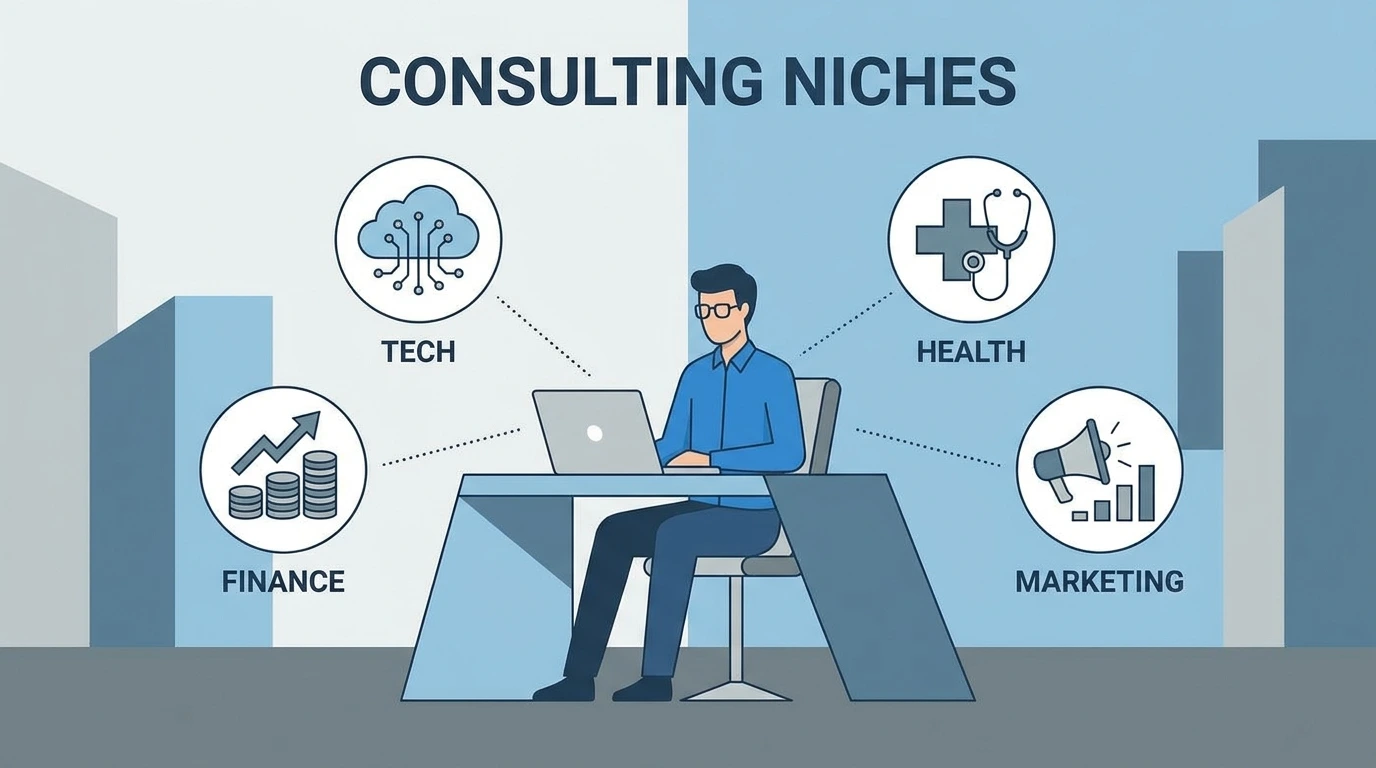
The following list covers the strongest consulting opportunities across technology, business operations, human resources, healthcare, and other specialized fields.
AI Consulting
Artificial intelligence consulting is among the fastest-growing advisory niches available. Businesses across every sector are trying to understand how AI tools apply to their specific workflows, and most lack internal expertise to guide that process.
AI consultants help organizations evaluate readiness, select appropriate tools, manage implementation, and measure outcomes. Engagements range from workshop-style education to full deployment oversight.
This niche suits professionals with backgrounds in data science, software development, machine learning, or technology strategy. However, operational AI consulting focused on tool adoption rather than model building is increasingly accessible to professionals with strong general technology fluency and practical experience with AI platforms.
For a complete breakdown of opportunities in this space, see the supporting article on AI consulting business ideas.
IT Consulting
IT consulting is one of the most established and consistently profitable consulting niches. Every business that relies on technology, which includes nearly all businesses today, is a potential client.
IT consultants help organizations with infrastructure planning, cybersecurity, cloud migration, software selection, systems integration, and technology vendor management. The niche is broad enough to build a general practice or narrow enough to specialize by industry, company size, or specific technology stack.
Entry into this field is strongest for professionals with certifications in platforms such as Microsoft Azure, AWS, Google Cloud, or Cisco, though experienced generalists with a strong track record also compete effectively. Learn more about specific opportunities in the IT consulting business ideas.
HR Consulting
Human resources consulting is a stable, recurring-need niche with strong demand across small and mid-sized businesses. Most companies below 100 employees cannot justify a full-time HR director, which creates consistent demand for fractional HR support.
HR consultants assist with hiring process design, employee handbook development, performance management systems, compensation benchmarking, and compliance with employment law. More senior HR consultants work at the organizational design level, advising on team structure, culture strategy, and leadership development.
This niche rewards professionals who combine people skills with procedural rigor. SHRM certification is widely respected and improves positioning with enterprise clients.
Healthcare Consulting
Healthcare consulting encompasses a wide range of services for providers, insurers, health technology companies, and government health agencies. The regulatory complexity of the healthcare industry creates persistent demand for outside expertise.
Healthcare consultants specialize in areas such as revenue cycle management, regulatory compliance, clinical workflow optimization, electronic health record implementation, and practice management. Some consultants focus on specific provider types such as dental practices, physical therapy clinics, or behavioral health organizations.
A clinical background helps but is not required for all subspecialties. Practice management and billing consulting, for example, often attract professionals from healthcare administration rather than clinical practice.
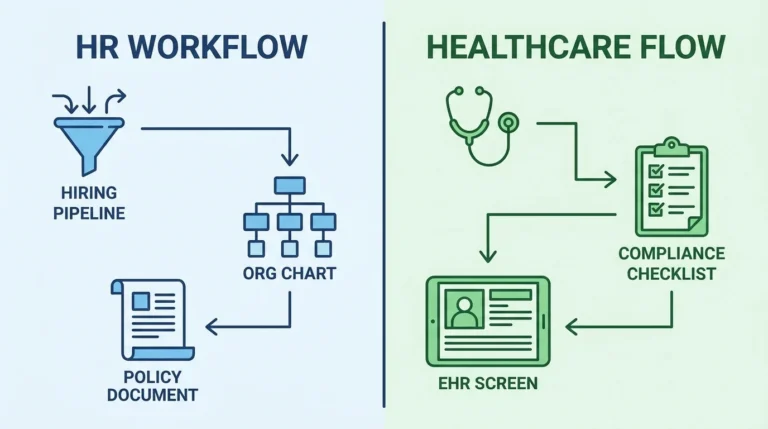
For more on the intersection of HR and healthcare advisory work, see HR and healthcare consulting.
Financial Consulting
Financial consulting covers advisory services related to financial planning, budgeting, investment strategy, cash flow management, and business finance optimization. This niche serves both individual consumers and business clients, though the business-to-business segment typically generates higher consulting fees.
Business financial consultants help companies understand their numbers, improve margins, prepare for financing, and navigate growth transitions. CFO consulting, where an experienced finance professional provides fractional chief financial officer services, has grown significantly among small businesses seeking financial leadership without a full-time executive hire.
Credentials matter in this field. CPAs and CFPs attract more business and command higher rates than uncredentialed consultants offering similar services.
Marketing Consulting
Marketing consulting is one of the most accessible consulting niches and one of the most competitive. The low barrier to entry means the market is crowded, but experienced consultants with a strong portfolio and clear specialization continue to build thriving practices.
Effective marketing consultants choose a lane, paid advertising, content strategy, email marketing, brand development, conversion optimization, or social media, and develop a reputation within it rather than positioning themselves as generalists.
Businesses consistently spend on marketing even in slow economies, which provides reasonable demand stability. The niche suits professionals who combine analytical capability with communication skills.
Operations Consulting
Operations consulting focuses on improving how businesses run internally, reducing waste, improving process efficiency, optimizing supply chains, and strengthening systems. This niche is particularly strong with manufacturing, logistics, and service businesses experiencing growth-related friction.
Operations consultants use frameworks such as Lean, Six Sigma, and process mapping to diagnose inefficiencies and design improvements. Many specialize by industry, since operational problems in a restaurant chain differ significantly from those in a professional services firm.
This niche rewards analytical consultants who are comfortable with process documentation, data analysis, and change management conversations.
Legal Consulting
Legal consulting differs from practicing law in that it typically involves compliance advisory, contract review, legal process design, and regulatory guidance rather than direct legal representation. Legal consultants are often practicing or former attorneys who prefer advisory work to litigation or firm life.
Business clients engage legal consultants for contract management, compliance program development, employment law guidance, and intellectual property strategy. Some legal consultants specialize by industry; healthcare, financial services, and technology companies have particularly complex regulatory environments.
Environmental Consulting
Environmental consulting services businesses and government agencies navigating regulatory compliance, environmental impact assessments, sustainability planning, and remediation projects. Growing corporate interest in ESG (Environmental, Social, and Governance) reporting has expanded demand beyond traditional industrial clients.
This niche suits professionals with backgrounds in environmental science, engineering, or sustainability. Geographic licensing requirements vary, and consultants working with regulated industries may need specific certifications.
Real Estate Consulting
Real estate consultants provide advisory services to property investors, developers, buyers, and corporate real estate teams. Services include market analysis, investment feasibility studies, site selection, and portfolio strategy.
This niche differs from real estate brokerage in that consultants are typically paid for advice rather than transaction commissions. The model appeals to experienced real estate professionals who prefer strategic work to transactional activity.
Education Consulting
Education consulting serves students, families, schools, and educational technology companies. Individual-focused consultants help students with college admissions strategy, scholarship searches, and academic planning. Institutional consultants work with school systems on curriculum development, technology adoption, and administrative improvement.
The college admissions consulting subspecialty has grown significantly, with families investing several thousand dollars in guidance for competitive university applications.
Executive and Leadership Coaching
Executive coaching sits at the intersection of consulting and coaching. Leadership consultants work with senior professionals on decision-making, communication, team management, and career development. This niche operates on retainer arrangements, often with monthly or quarterly session structures.
Credentialing through the International Coach Federation (ICF) adds credibility, particularly when targeting corporate clients with formal vendor qualification processes.
Nonprofit Consulting
Nonprofit consulting serves charitable organizations, foundations, and advocacy groups that need professional expertise without the budget for full-time specialists. Services include grant writing, fundraising strategy, board development, program evaluation, and organizational assessment.
Consultants with a background in nonprofit management, development, or program administration are well positioned to enter this niche. Fee structures are typically lower than corporate consulting, but mission alignment makes the work sustainable for many practitioners.
Cybersecurity Consulting
Cybersecurity consulting has moved from a niche specialty to a mainstream business need. Organizations of all sizes face regulatory pressure, insurance requirements, and real breach risk, all of which drive demand for outside security expertise.
Cybersecurity consultants perform risk assessments, design security policies, support compliance frameworks such as SOC 2, ISO 27001, and HIPAA, and advise on incident response planning. Certifications such as CISSP, CISA, and CompTIA Security+ strengthen market positioning considerably.
Supply Chain Consulting
Supply chain consulting became a high-visibility field following disruptions from global events that exposed fragility in logistics and sourcing systems. Businesses now actively invest in supply chain resilience, which has translated into expanded consulting demand.
Supply chain consultants assess sourcing strategies, inventory models, supplier relationships, and logistics infrastructure. This niche suits professionals with experience in procurement, operations, or global trade.
Sales Consulting
Sales consulting helps businesses improve their revenue generation processes. Services include sales team assessment, pipeline design, CRM implementation, sales training, compensation structure review, and go-to-market strategy development.
This niche appeals to experienced sales leaders who understand the full revenue cycle and can translate that knowledge into systematic improvements for client organizations.
Public Relations Consulting
PR consulting serves businesses, executives, nonprofits, and public figures who need to manage their reputation and media relationships. Services include media outreach, crisis communication, press release development, messaging strategy, and spokesperson preparation.
Boutique PR consulting firms are common in this space, and many solo consultants build sustainable practices serving specific industries such as technology, healthcare, or professional services.
Diversity, Equity, and Inclusion Consulting
DEI consulting helps organizations assess their workplace culture, develop inclusive policies, design training programs, and measure progress toward equity goals. Demand has grown substantially among mid-size and enterprise employers navigating both regulatory expectations and employee retention challenges.
Consultants in this niche typically combine lived experience with professional expertise in organizational development, HR, or social science research.
Grant Consulting
Grant consultants assist nonprofit organizations, educational institutions, and government agencies in identifying funding opportunities and preparing competitive grant applications. Strong writing skills, attention to deadline management, and familiarity with foundation funding priorities are core requirements.
Many grant consultants work on a project or retainer basis, with fees structured either as flat rates per application or as a percentage of awarded funding.
How to Start a Consulting Business
Starting a consulting business requires a clear sequence of decisions.
Define your service offering. Identify the specific problem you solve, for whom, and with what method. Vague positioning makes client acquisition harder.
Establish your pricing model. Decide whether you will charge hourly, by project, or on retainer before your first client conversation.
Create a professional presence. At minimum, build a professional LinkedIn profile and a simple website that communicates your niche, credentials, and contact information.
Get your first client. Most early consulting clients come from existing professional relationships. Start with your network before investing in outbound marketing.
Formalize the business. Register your business entity, open a separate business bank account, and set up basic accounting using tools such as QuickBooks or Wave. Consult with a tax professional regarding self-employment obligations. Build systems. Use tools like Calendly for scheduling, Zoom or Google Meet for client sessions, and Notion or a simple CRM for client tracking.
What to Expect in the First Year
The first year of consulting typically involves more business development than billable work. Expect to spend significant time building credibility, generating referrals, and refining your positioning based on real market feedback.
Revenue is often irregular early on. Building a retainer client base as quickly as possible provides greater stability than relying solely on project work.
Most consultants who succeed past the first year do so because they specialized clearly, delivered measurable results, and asked every satisfied client for a referral.
Frequently Asked Questions
What consulting business is most profitable?
Technology-related consulting niches, including AI, cybersecurity, and IT infrastructure, consistently produce the highest hourly rates. Financial and legal consulting also generate strong revenue. Profitability depends heavily on specialization, positioning, and the ability to demonstrate measurable results.
Do I need a certification to start a consulting business?
Certification requirements vary by niche. Some fields such as financial planning, legal consulting, and environmental consulting have licensing or regulatory requirements. Others rely primarily on demonstrated expertise, portfolio quality, and professional reputation. Research the specific requirements for your target niche before launching.
How much can a consultant charge per hour?
Rates vary widely by specialty, experience, and geographic market. Entry-level consultants in general business niches typically charge $75 to $150 per hour. Experienced technical or regulatory consultants regularly command $200 to $500 per hour or more. Project-based and retainer pricing often results in higher effective hourly rates than hourly billing alone.
Can I start a consulting business while employed?
Many consultants begin by taking clients on a part-time basis while maintaining employment. Review your employment agreement carefully for non-compete or conflict of interest clauses before proceeding. Avoid soliciting clients from your current employer.
How do consultants find their first clients?
Most first clients come from professional networks, former colleagues, industry contacts, and direct referrals. LinkedIn is consistently the most effective digital channel for consultant client acquisition. Niche industry events and professional associations also generate qualified introductions.