Consulting Business Branding: A Complete Guide to Building a Brand That Wins Clients
Consulting business branding is more than a logo or color palette. It is the impression potential clients form before they…
Consulting business branding is more than a logo or color palette. It is the impression potential clients form before they ever speak with you. Your brand shapes how people perceive your expertise, how much they trust your recommendations, and whether they feel confident enough to hire you instead of a competitor.
Many consultants underinvest in branding because it seems less important than delivering great work. In reality, that is a costly mistake. In a market where clients cannot fully evaluate your expertise before making a hiring decision, your brand does much of the selling for you. A weak brand creates doubt and makes client acquisition more difficult, while a strong, consistent brand builds credibility, differentiates your business, and attracts higher-quality clients.
This guide explores every aspect of consulting business branding, including what a consulting brand really is, why it matters, how to define your positioning and messaging, build a professional visual identity, establish authority across your website and marketing channels, and create a cohesive brand that consistently attracts your ideal clients.
What a Consulting Brand Actually Is
A brand is not a logo. It is not a color palette or a tagline. Those are brand elements. The brand itself is the overall perception that exists in the minds of the people who encounter your business. Your consulting brand is what clients think of when they hear your name, what they feel when they look at your website, and what they tell others when they describe what you do. It is the sum of every impression your business creates across every touchpoint.
For a consulting business, brand perception is built through several channels working together. Your business name communicates positioning and personality. Your visual identity communicates professionalism and quality. Your personal presence communicates credibility and character. Your content communicates expertise and perspective. Your client experience communicates reliability and care.
Each of these channels reinforces or contradicts the others. A consultant with a polished logo but an unfocused LinkedIn profile sends a confused signal. A consultant with sharp content but an amateurish visual identity leaves credibility on the table. Strong branding means every channel tells the same story.
Why Branding Matters More in Consulting Than in Most Businesses
In product businesses, clients evaluate physical goods before buying. They can see the product, touch it, try it, or read reviews from people who have used it. The brand reinforces quality, but the product speaks for itself to some degree.
In consulting, the product is invisible before purchase. Clients are buying your judgment, your expertise, and your ability to guide them through a problem they have not solved yet. They cannot evaluate the quality of your advice before they receive it. That asymmetry places enormous weight on everything that signals quality indirectly, and your brand is the primary source of those signals.
A strong consulting brand communicates competence before the first conversation. It reduces the perceived risk of hiring you. It justifies higher fees because it positions you as a premium provider rather than a commodity. And it attracts clients who are already aligned with your approach, which makes engagements smoother and more productive.
The Core Components of a Consulting Brand
A complete consulting brand consists of several interconnected components. Each deserves deliberate attention rather than default decisions.
Brand Positioning
Brand positioning is the foundation everything else is built on. It defines who you serve, what problem you solve, and what makes your approach distinctive compared to other consultants in your space.
Without clear positioning, every other brand decision becomes harder. Your business name, visual identity, content, and messaging all need to express something specific. If you have not defined what that something is, the result is vague and forgettable.
Strong positioning answers three questions clearly. Who is this brand for? What specific problem does it solve? Why should a potential client choose this consultant over others? Your positioning statement does not need to appear verbatim on your website. But every element of your brand should be making the same implicit argument that your positioning makes explicitly.
Business Name
Your consulting business name is often the first brand element a potential client encounters. It sets the initial tone for how they interpret everything that follows. Consulting business names fall broadly into two categories. Personal name brands use the consultant’s own name, which builds personal credibility and transfers reputation directly to the business. Firm name brands use a created name that positions the business as a company rather than an individual, which supports future scaling and can communicate a specific positioning in the name itself.
Both approaches work. The right choice depends on whether you intend to build a solo practice primarily around your personal reputation or whether you plan to grow a firm that operates beyond your individual involvement. The article on consulting business names covers naming strategies, naming mistakes to avoid, and a detailed process for choosing a name that serves your brand long-term.
Visual Identity
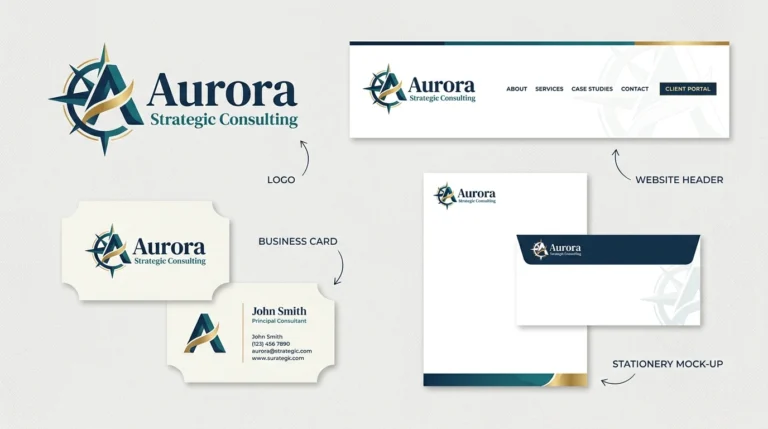
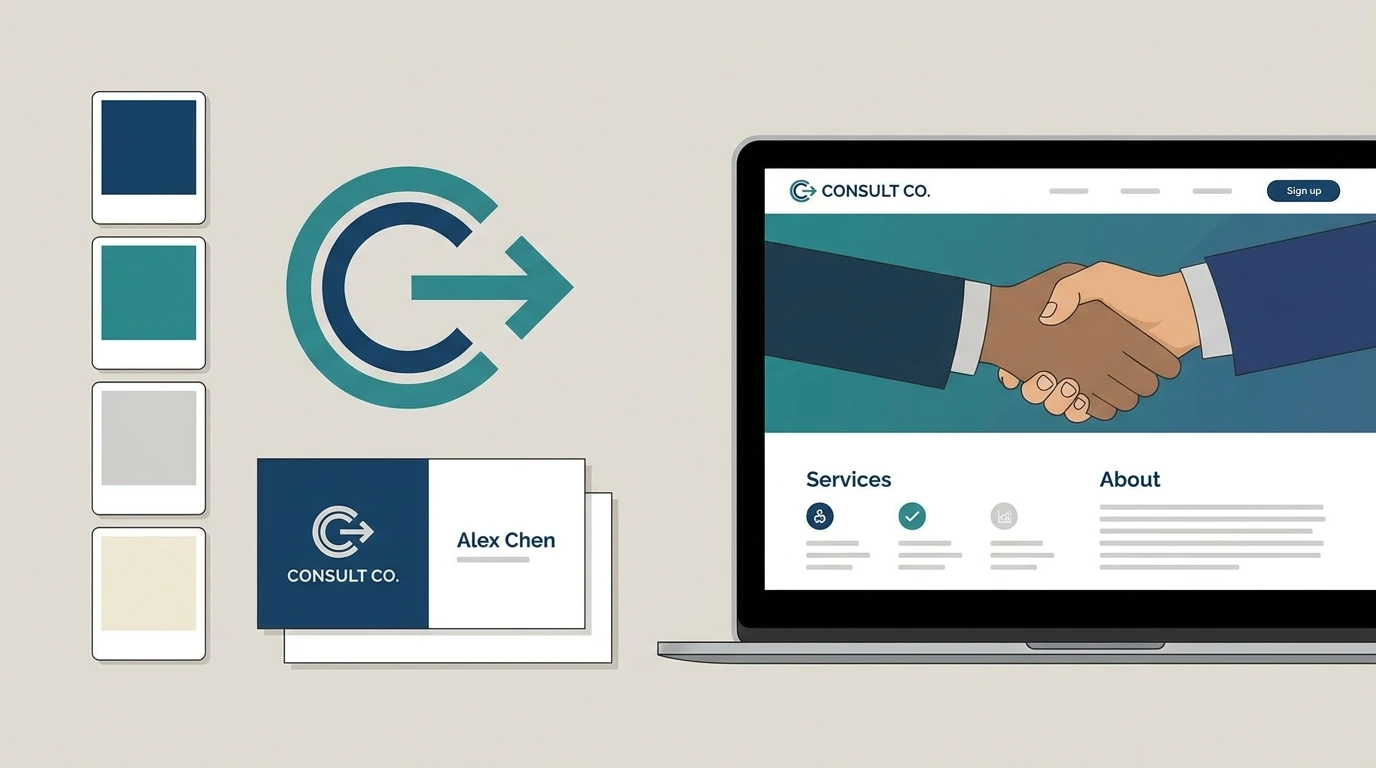
Your visual identity is the set of visual elements that represent your brand consistently across all touchpoints. It includes your logo, color palette, typography, and the overall aesthetic of your branded materials.
Visual identity does not need to be elaborate to be effective. What it needs to be is consistent and appropriate for the clients you serve. A cybersecurity consultant targeting enterprise clients needs a different visual register than a wellness consultant serving individual coaches. Both can have strong visual identities. The difference is in the tone those identities communicate.
Color choices carry psychological associations that vary by industry and audience. Typography communicates personality through the character of the letterforms. The logo anchors the visual system and appears across every branded surface.
Logo Design
Your logo is the most visible single element of your visual identity. It appears on your website, business cards, proposal documents, email signature, social media profiles, and any other surface where your brand is present.
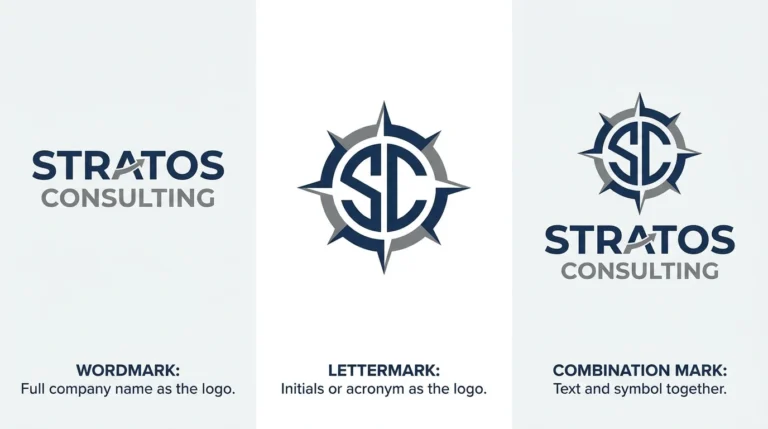
A good consulting logo does not need to be complex or conceptually clever. It needs to be clean, scalable, appropriate for your audience, and distinctive enough to be recognizable. Many of the most effective consulting logos are wordmarks, which use the business name set in a distinctive typeface, or simple combination marks, which pair a clean icon with the business name.
The article on consulting business logos covers logo design options in detail, including how to brief a designer, what to expect at different price points, and how to evaluate whether a logo is serving your brand effectively.
Business Cards
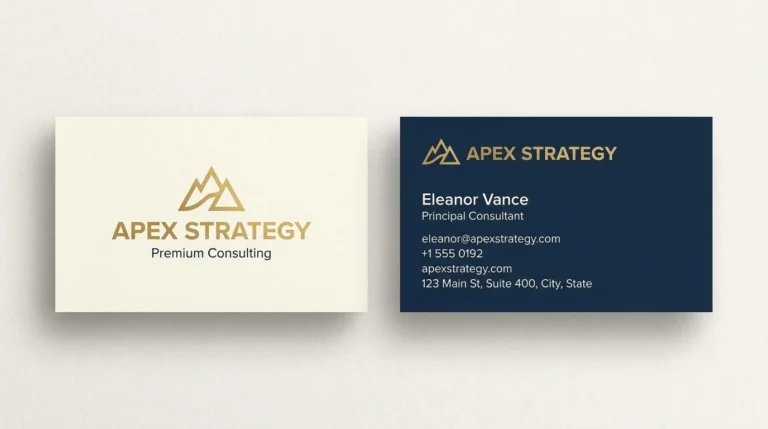
Business cards remain a relevant and practical branding tool for consultants, particularly those who attend industry events, professional associations, and in-person client meetings. A well-designed card reinforces your professional image at a critical moment in a new relationship. The design of your business card should align with the rest of your visual identity. The same fonts, colors, and overall aesthetic that appear on your website and proposal documents should appear on your card. Inconsistency between your card and your other materials sends a disorganized signal.
Beyond design, consider the physical quality of the card. Paper weight, finish, and printing quality all contribute to the impression the card leaves. A cheap card on thin stock undermines a premium brand positioning immediately. The article on consulting business cards covers design principles, printing options, what information to include, and how to use business cards effectively in your client development process.
Personal Brand
For most solo consultants, the personal brand is inseparable from the business brand. Clients are not just hiring your firm. They are hiring you specifically, based on their assessment of your expertise, judgment, communication style, and professional character.
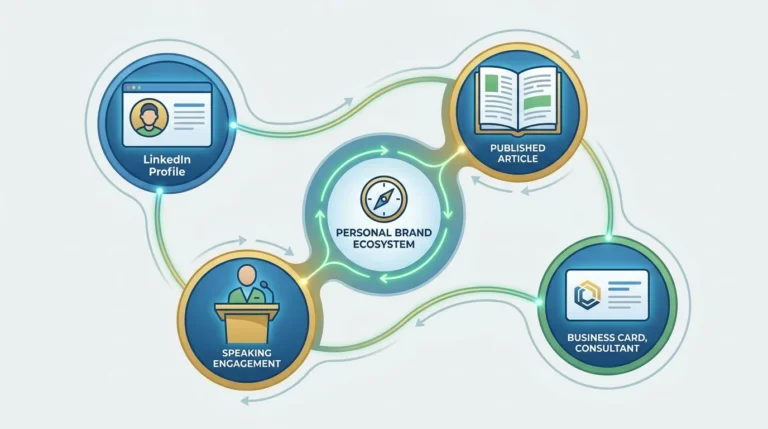
Your personal brand is built through the content you publish, the positions you take, the way you communicate in professional settings, and the reputation you develop through the quality of your work. LinkedIn is the most important platform for most consultants, but your personal brand also exists through speaking engagements, contributed articles, podcast appearances, and the conversations clients have about you with their peers.
Personal branding requires consistency over time. It is not built through a single post or a single event. It develops through repeated demonstrations of expertise and genuine professional engagement in your field. The article on personal branding for consultants covers the full process of building a personal brand that strengthens your consulting practice, including how to develop your professional voice, what to publish, and how to build visibility in your niche without spending money on advertising.
Brand Voice
Brand voice is the consistent personality that comes through in everything you write and say as a business. It is the difference between clinical and approachable, formal and conversational, and technical and accessible.
Your brand voice should reflect how your target clients prefer to communicate and how you most naturally express yourself. A disconnect between your natural communication style and your brand voice creates a performance that is exhausting to maintain and eventually rings false to clients who interact with you over time.
Define your brand voice in practical terms. Is it direct or exploratory? Technical or plain language? Formal or conversational? Serious or lightly humorous? Identify three to five adjectives that describe the tone you want to maintain consistently, and use those as a reference when creating any branded content.
Brand Consistency Across Touchpoints
The most important principle in consulting brand management is consistency. Every place a potential or current client encounters your brand should reinforce the same positioning, the same visual identity, and the same voice.
Inconsistency is more damaging than imperfection. A brand that is mediocre but consistent signals reliability. A brand that is sometimes polished and sometimes careless signals disorganization, which is the last impression any consultant wants to make.
Conduct a simple brand audit across your primary touchpoints. Look at your website, LinkedIn profile, email signature, proposal templates, and any other materials clients encounter. Do they tell the same story? Do they use the same visual elements? Do they communicate the same positioning? Wherever the answer is no, that is where your branding needs attention.
Building Your Consulting Brand Step by Step
Building a consulting brand is most manageable as a sequential process rather than attempting to address everything simultaneously.
Start with positioning: Before any visual decisions, clarity on who you serve and what makes you distinctive is essential. Every other brand element expresses that positioning.
Choose your business name next: The name needs to work before you build visual identity around it. Changing a name after logos, cards, and a website have been built is expensive and disruptive.
Develop your visual identity: Work with a professional designer or use a high-quality design platform to create a logo, select a color palette, and choose typography that represents your positioning appropriately.
Build your website. Even a simple three-page site that communicates your positioning, services, and contact information is sufficient to establish a professional online presence. The site should use your visual identity consistently.
Optimize your LinkedIn profile: For most consultants, LinkedIn is more important than any other digital channel. Your profile should communicate your positioning clearly, demonstrate your expertise, and make it easy for potential clients to understand who you serve and what you do.
Develop your proposal and document templates: Client-facing documents should carry your visual identity. Consistent, professionally designed proposals reinforce the quality signal your brand is building.
Build your content presence gradually: Publishing consistent, genuinely useful content in your niche builds your personal brand and reinforces your business brand over time. This is a long-term investment that compounds rather than a short-term tactic.
Common Consulting Branding Mistakes
Several branding mistakes are particularly common among consultants starting or growing their practice.
Skipping positioning and going straight to visual design produces a logo and color palette that look fine but communicate nothing specific. Visual identity without positioning behind it is decoration, not branding.
Choosing a business name that limits future growth is a mistake that becomes apparent only when the practice evolves. A name that is too niche-specific, too personal, or too obscure creates friction as the business develops. Using inconsistent visual elements across different platforms signals disorganization. Different headshots on different platforms, different color treatments on different documents, and different logo versions in different sizes all create a fragmented impression.
Neglecting the personal brand while investing in business brand elements misses where most consulting business is actually won. Clients hire consultants they trust as people. The personal brand is where that trust is built. Rebranding too frequently signals instability. Some consultants redesign their visual identity every year or two because they are not satisfied with the results they are getting. In most cases, the problem is not the brand. It is the business development activity, pricing, or positioning. Frequent rebranding is an expensive distraction from the actual work of building a practice.
How much should a consultant spend on branding?
Branding investment varies significantly based on stage and ambition. A new consultant can build a credible brand for under $1,000 using quality design platforms and stock resources. A more developed practice might invest $3,000 to $10,000 in professional design, website development, and brand strategy. The investment should be proportional to the revenue stage of the practice.
Should a consultant use their own name or create a firm name?
Both approaches work well. Personal name brands build direct reputation and personal credibility. Firm names support scaling and can communicate positioning more explicitly in the name itself. The right choice depends on whether your long-term vision is a solo practice or a firm that operates beyond your individual involvement.
How important is a logo for a consulting business?
A logo is important as a consistency anchor but is not the most important brand element for most consultants. A clean, professional logo that works across different surfaces matters. An elaborate or expensive logo does not produce meaningfully better results than a simple, well-executed one. Positioning, personal brand, and content credibility matter more to most consulting clients than logo sophistication.
Can a consultant build a strong brand without social media?
Yes, but it is more difficult. Referral networks, speaking engagements, and direct outreach can build a strong brand without social media. However, LinkedIn specifically provides so much leverage for consultant visibility and credibility that avoiding it entirely is a significant competitive disadvantage for most practitioners.
How long does it take to build a consulting brand?
Visual brand elements can be developed in two to four weeks. Brand reputation, which is what actually drives client decisions, takes much longer. Most consultants find that it takes twelve to twenty-four months of consistent activity before their brand generates meaningful inbound interest without active outreach. Brand building is a long-term investment.
How much does a branding consultant cost?
The post does not quote a separate branding-consultant fee. Its branding investment figures are the closest guide: a new consultant can build a credible brand for under $1,000 using quality design platforms and stock resources, while a more developed practice might invest $3,000 to $10,000 in professional design, website development, and brand strategy. The investment should be proportional to the revenue stage of the practice.
Conclusion
Your consulting brand is not a cosmetic exercise. It is the infrastructure that supports every client conversation, every proposal, and every referral. When it is working well, it builds trust before you enter the room and justifies premium fees before you have said a word. Build your brand deliberately, starting with positioning and working outward through name, visual identity, personal presence, and content. Keep every element consistent and aligned with the clients you want to attract.