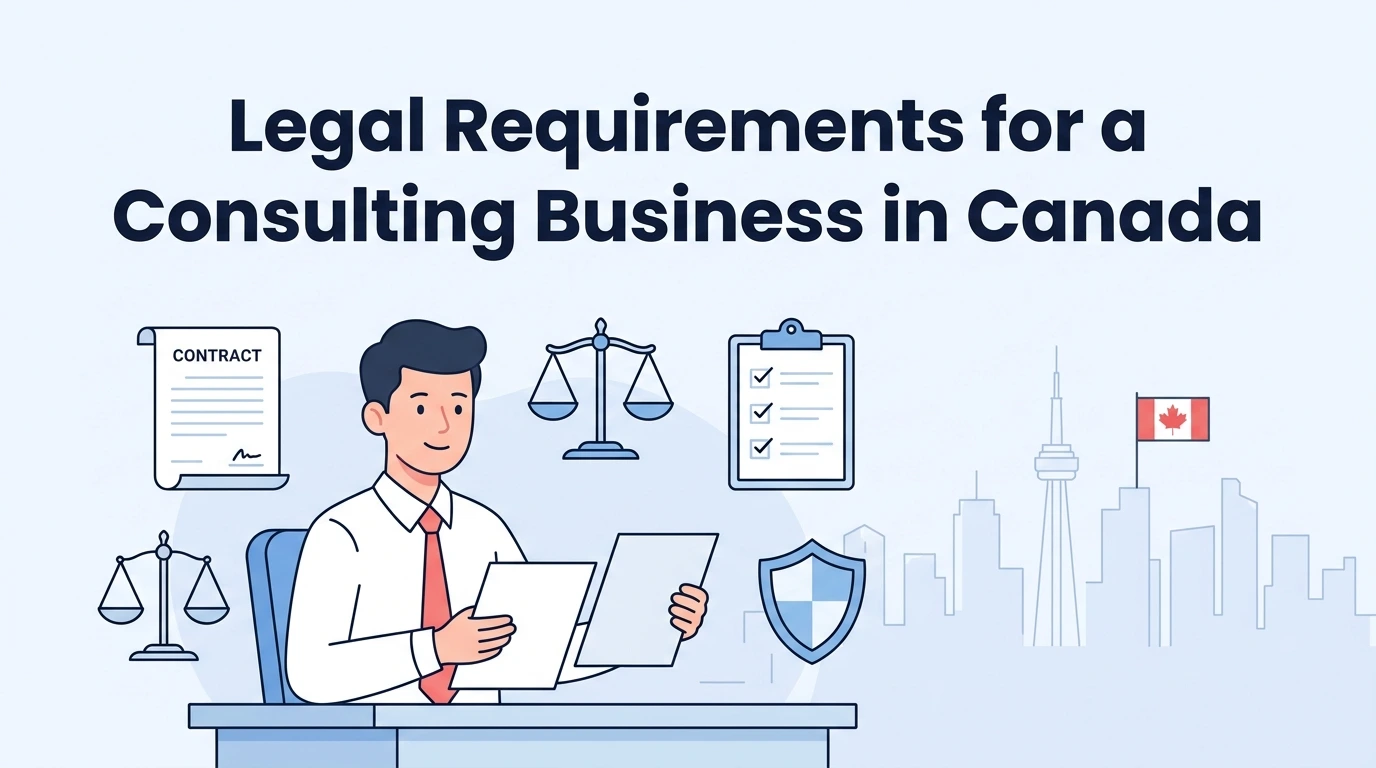
Legal Requirements for a Consulting Business in Canada (A Beginner’s Guide)
Introduction Understanding the legal requirements for a consulting business in Canada is something every new consultant needs to get right…
Introduction
Understanding the legal requirements for a consulting business in Canada is something every new consultant needs to get right from the start. The good news is that for most types of consulting, the legal side is straightforward. You don’t need a law degree or a stack of permits to get going, but there are a few important things you need to have in place to operate properly and protect yourself.
This guide walks through each legal requirement clearly so you know what applies to you, what you can handle yourself, and where it’s worth getting professional help.
If you’re still working through the full picture of setting up your consulting practice, the main guide on how to start a consulting business in Canada covers everything from choosing your niche to registration, taxes, and beyond.
Do Consultants Need Legal Registration in Canada?
The short answer is yes, in most cases.
If you operate under your own legal name as a sole proprietor, some provinces allow you to start consulting without any formal registration. But if you plan to use a business name other than your own full legal name, you need to register that name with your provincial government before using it.
Beyond the business name, you may also need to register with the Canada Revenue Agency for a business number and a GST/HST account once your revenue reaches $30,000 in a year. If you incorporate, the registration process is more involved and creates a separate legal entity.
Getting registered isn’t just a legal box to tick. It lets you open a business bank account, sign contracts professionally, and present yourself as a legitimate business to clients. Most clients, especially larger ones, expect to see a properly registered business before they’ll work with you.
Business Licenses and Permits in Canada
This is where many beginners expect complexity and are pleasantly surprised. Most general consulting businesses in Canada do not require a specific business license to operate.
Unlike running a restaurant, a daycare, or a construction company, business consulting doesn’t typically involve regulated activities that require government approval. If you’re advising clients on strategy, marketing, operations, HR, or technology, there’s no license required beyond your basic business registration.
That said, some consulting niches are regulated. If you provide financial advice or manage investments, you may need to be registered with the Investment Industry Regulatory Organization of Canada (IIROC) or another provincial securities regulator. If your work touches on legal matters, you need to be a licensed lawyer. Healthcare consulting that involves clinical decisions has its own regulatory requirements.
The key question to ask is whether your consulting work falls into a regulated profession or industry. If it does, research the specific licensing body in your province. If it doesn’t, a standard business registration is all you need to get started.
Municipal business licenses are another thing worth checking. Some cities and municipalities require a general business license for any business operating within their boundaries, including home-based businesses. The fee is usually small (anywhere from $50 to $150 per year), but skipping it can lead to fines. Check your local municipality’s website to find out whether this applies to you.
Sole Proprietorship vs Corporation Legal Differences
The legal structure you choose has real implications for how you’re protected if something goes wrong.
As a sole proprietor, you and your business are legally the same. That means if a client takes legal action against you, your personal assets (savings, car, home) can potentially be targeted. You carry full personal liability for everything the business does.
A corporation, by contrast, is a separate legal entity. The corporation can be sued, but in most situations your personal assets are shielded. This is called limited liability, and it’s one of the main reasons consultants incorporate as their income grows.
From a legal standpoint, a corporation also gives you more credibility when working with larger clients. Some organizations have policies about only contracting with incorporated businesses, not individual sole proprietors.
The tradeoff is that corporations come with more legal obligations: annual filings, a corporate minute book, maintaining proper records, and typically working with an accountant on an ongoing basis. For most new consultants, starting as a sole proprietor and incorporating later when the benefits justify it is a sensible path.
Contracts and Client Agreements
If there’s one legal requirement for a consulting business in Canada that matters more than anything else, it’s this: always use a written contract.
A contract protects both you and your client. It defines what you’re delivering, the timeline, the payment terms, and what happens if either party wants to end the arrangement early. Without one, you’re relying on verbal agreements and good faith, and those fall apart quickly when there’s a dispute over money or deliverables.
Your contract doesn’t need to be a 20-page legal document. A clear, plain-language agreement that covers the scope of work, payment amount and schedule, revision or change request policies, confidentiality expectations, and termination conditions is enough for most consulting projects.
You can find simple consulting contract templates online, and many of them are good enough to use with minor adjustments. If you’re doing high-value or long-term work for a client, having a lawyer review your standard contract once is a smart investment. You can then reuse that same template for future clients.
One more thing: An invoice is not a contract. Don’t start work based on an invoice alone. Get the agreement signed before you begin.
Business Insurance for Consultants
Insurance isn’t the most exciting topic, but it’s an important part of the legal requirements for a consulting business in Canada, particularly professional liability insurance.
Also called errors and omissions (E&O) insurance, this coverage protects you if a client claims that your advice or work caused them financial harm. Even if the claim against you is unfounded, defending yourself without insurance can be extremely costly. With insurance, your insurer handles the legal costs.
Many larger clients, especially in finance, government, or healthcare, will require you to carry professional liability insurance before they’ll sign a contract with you. Having it in place before you start pursuing these clients removes a potential barrier.
Annual premiums for a solo consultant in Canada typically range from $500 to $1,500 depending on your field and the level of coverage. It’s one of the more worthwhile expenses in the business.
General liability insurance is a separate product that covers things like property damage or personal injury claims. Most consultants don’t need it if they work remotely or from a home office, but it’s worth considering if you regularly meet clients in person or work on client premises.
Privacy Laws and Client Data Protection
Canada has federal privacy legislation, the Personal Information Protection and Electronic Documents Act, commonly known as PIPEDA, that applies to how businesses handle personal information. Most provinces have their own privacy laws as well, some of which are stricter than the federal standard.
As a consultant, you’ll often handle sensitive client information: financial data, business strategy, employee records, or customer information. Under Canadian privacy law, you have responsibilities around how you collect, store, use, and protect that information.
The practical implications for most solo consultants are manageable. Use secure tools to share and store client files. Don’t share client information with anyone outside the project without permission. Have a basic data handling policy in place, especially if your clients are in regulated industries. If a client asks you to sign a non-disclosure agreement (NDA), understand what you’re agreeing to before you sign.
For most consultants, following common-sense data hygiene, strong passwords, encrypted file sharing, and not leaving sensitive documents in unprotected locations covers the basics of what the law requires.
Tax and Legal Compliance Basics
Tax compliance is closely tied to your legal obligations as a consultant in Canada. Failing to report income, not remitting GST/HST when required, or missing filing deadlines can result in penalties and interest charges from the CRA.
The key obligations are straightforward: file your personal tax return annually, report all consulting income, claim eligible deductions, and register for and remit GST/HST once your revenue crosses the $30,000 threshold.
If you’re incorporated, your corporation also needs to file a separate corporate tax return each year, typically within six months of the corporation’s fiscal year end.
Staying compliant isn’t complicated when you keep organized records and file on time. The problems start when consultants fall behind on their bookkeeping, mix personal and business finances, or miss filing deadlines without realizing the consequences.
Common Legal Mistakes Beginners Make
Working without a contract is the most common and most avoidable mistake. Even a short, clear agreement protects you from payment disputes and scope creep. No contract means no clear terms and no legal standing if things go sideways.
Skipping insurance is another one. Many new consultants put it off to save money early on, then run into a client requirement or an actual dispute without any coverage in place. Getting insured before you start working with clients is the right order of operations.
Not separating personal and business finances creates both legal and tax complications. If you’re ever audited or involved in a dispute, having clean business records is important. A mixed account makes both of those situations much harder to manage.
Ignoring municipal licensing requirements is also common. A small annual business license fee is easy to miss, but operating without one when it’s required can lead to fines down the line.
And finally, using vague or borrowed contract language without understanding what it says. If your contract doesn’t clearly define scope, deliverables, and payment terms, it’s not much protection. Take the time to understand what’s in your agreement before you send it to clients.
Tips to Stay Legally Safe as a Consultant in Canada
Use a written contract for every project, no matter how small or how well you know the client. Have a standard template ready so it doesn’t slow you down.
Get professional liability insurance before you start working with clients, not after. It’s faster to set up than most people expect and gives you peace of mind from day one.
Keep your business finances separate from personal ones. Open a dedicated business bank account and use it exclusively for consulting income and business expenses.
Stay on top of your tax filings and GST/HST obligations. Missing a deadline or failing to register when required creates legal problems that take time and money to fix.
Review your contracts and insurance coverage once a year. As your business grows and your services change, your agreements and coverage should evolve with them.
When Should You Speak with a Lawyer or Accountant?
You don’t need a lawyer to start a basic consulting business in Canada, but there are situations where getting legal advice is genuinely worth the cost.
Speak with a lawyer when you’re considering incorporation and want to understand the implications, when a client presents you with a contract that has complex or unusual terms, when you’re entering a partnership with another consultant, or when a client dispute escalates beyond what you can resolve directly.
An accountant is worth consulting before you register your business if you’re unsure about your structure and definitely worth working with at tax time each year. They can also advise on when incorporation starts making financial sense for your income level.
Both lawyers and accountants charge for their time, but a one-hour conversation at the right moment can prevent problems that cost far more to untangle later.
Conclusion
The legal requirements for a consulting business in Canada are manageable for most beginners. Register your business properly, use contracts with every client, get the right insurance in place, understand your tax obligations, and handle client data responsibly. That covers the core of what the law expects from you.
The legal side of consulting isn’t something to ignore, but it also shouldn’t be something that stops you from getting started. Get the basics in place, work with a professional when the situation calls for it, and build sound habits from day one.
For the complete picture of setting up and running your consulting business, the main guide on how to start a consulting business in Canada is the right place to start.
Do I need a business license to start a consulting business in Canada?
Most general consulting businesses don’t require a specific license. You may need a municipal business license depending on your city, and some regulated fields like financial advising require professional registration. Check what applies to your specific niche.
Is a written contract legally required for consulting work in Canada?
It’s not legally required, but it’s essential in practice. Without a contract, you have no clear legal standing if a client disputes payment or scope. Always use a written agreement before starting any project.
What insurance do consultants need in Canada?
Professional liability insurance (errors and omissions) is the most important coverage for consultants. Some clients require it before signing a contract. General liability insurance may also be relevant if you meet clients in person regularly.
Does Canadian privacy law apply to solo consultants?
Yes. PIPEDA and provincial privacy laws apply to businesses of all sizes. If you handle client data, even basic contact or business information, you have responsibilities around how you collect, store, and protect it.
When should I incorporate my consulting business in Canada?
There’s no single right answer, but most consultants consider incorporating once their income is consistent and the tax advantages become meaningful. Speaking with an accountant about your specific income level is the best way to make that decision.
Do I need a lawyer to start a consulting business in Canada?
Not for a basic sole proprietorship. But consulting a lawyer when you’re incorporating, entering a partnership, or dealing with a client dispute is well worth the cost.