
How to Start a Consulting Business in Canada (A Complete Beginner’s Guide)
Introduction Start a consulting business in Canada is one of the most accessible ways to turn your skills and knowledge…
Introduction
Start a consulting business in Canada is one of the most accessible ways to turn your skills and knowledge into a real income. You don’t need a big team, a fancy office, or years of corporate experience. Plenty of people have built profitable consulting practices from a spare bedroom, working with clients across Canada and internationally.
But knowing where to begin is the hard part. There are registrations to sort out, taxes to understand, and a handful of decisions you need to make early on that will shape how your business runs. This guide walks you through the full picture so you know exactly what to expect and what to do first.
Why Canada Is a Strong Place to Start a Consulting Business
Canada has a healthy business environment for independent consultants. The government actively supports small business owners through programs, tax deductions, and a relatively straightforward registration process. Companies across industries from tech to healthcare to real estate regularly hire outside consultants instead of full-time staff because it saves them money and gives them access to specialized knowledge on demand.
The Canadian economy is also diverse. Whether you want to work with small local businesses or land contracts with larger organizations, there’s genuine demand for consulting services in almost every field. And with remote work now widely accepted, your location matters far less than it used to. A consultant based in Halifax can easily serve clients in Calgary or Toronto.
Can Beginners Start a Consulting Business in Canada?
Yes and more easily than most people assume. You don’t need a business degree or a decade of experience to get started. What you do need is a real skill that solves a real problem for someone.
Think about what you know how to do well. Maybe you’ve spent years managing social media accounts, doing bookkeeping, writing content, advising on HR policies, or building websites. Any of that can become a consulting service. The key is focusing on a specific group of people with a specific problem and offering to help them fix it.
Many successful consultants in Canada started part-time while still employed somewhere else. They took on one or two small clients, built confidence, and eventually moved to full-time consulting once the income was consistent. That’s a perfectly reasonable path.
Types of Consulting Businesses in Canada
The consulting world covers a wide range of areas. Here are some of the most common types of consulting businesses Canadians run:
Business and management consulting: helping companies improve their operations, strategy, or processes.
Marketing and communications consulting: advising on branding, advertising, social media, or public relations.
Financial consulting: working with individuals or businesses on budgeting, investments, or financial planning (some areas require licensing).
HR consulting: helping businesses with hiring, workplace policies, and employee relations.
IT and technology consulting: advising on software, cybersecurity, systems, or digital transformation.
Environmental and sustainability consulting: growing fast in Canada, especially with government and construction clients.
Legal consulting: typically requires a law degree, but some areas involve contract review and compliance advice.
There are dozens more niches beyond these. The point is that consulting is not a single industry. It’s a way of working that applies to almost any field.
Choosing a Consulting Niche
Trying to help everyone is a common mistake beginners make. The consultants who grow the fastest are the ones who pick a clear niche and become known for it.
Your niche is basically the intersection of three things: what you’re genuinely good at, what people are willing to pay for, and what you actually enjoy doing. If you can find something that hits all three, you’re in a good position.
A niche doesn’t have to be narrow forever. You might start as a social media consultant for small restaurants, build a client base, and later expand to other food and hospitality businesses. The niche gives you focus early on when you’re still building credibility.
When you’re figuring out your niche, ask yourself, “Who would call me if they had a problem I could solve?” That answer usually points you in the right direction.
Step-by-Step Process to Start a Consulting Business in Canada
Here’s the broad roadmap. Each step gets covered in more detail in the sections below and in the supporting articles linked throughout this guide.
Step 1: Decide on your consulting niche: Figure out what service you’re offering and who your target client is.
Step 2: Choose your business structure: Most beginners start as a sole proprietor. Some move to a corporation later for tax reasons.
Step 3: Register your business: This varies by province. You may need to register a business name or incorporate federally or provincially.
Step 4: Sort out your finances: Open a separate business bank account. Set up a basic system to track income and expenses from day one.
Step 5: Understand your tax obligations: As a self-employed consultant in Canada, you’ll handle taxes differently than an employee would.
Step 6: Get your first clients: Start with your existing network. Tell people what you do. Offer a first project at a reasonable rate in exchange for a testimonial.
Step 7: Deliver great work and build your reputation: Word of mouth is still one of the most powerful marketing tools for consultants.
Registering Your Consulting Business in Canada
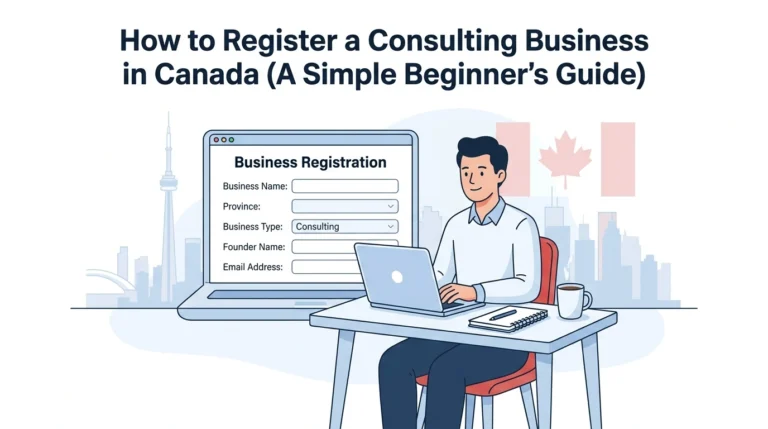
One of the first practical steps is getting your business officially registered. The process depends on your province and the structure you choose.
If you operate as a sole proprietor using only your legal name, some provinces don’t require formal registration. But if you use a business name (like “North Star Consulting”), you’ll need to register that name with your provincial government.
Starting a Consulting Business in Ontario
Ontario is one of the most common provinces where people take this step, and the process there is well-defined. Sole proprietors operating under a business name register through the Ontario Business Registry, which can be done online for a modest fee. If you’re starting a consulting business in Ontario and plan to incorporate, you can do so provincially through the Ontario Business Registry or federally through Corporations Canada, depending on where you intend to operate. Ontario also has specific requirements around business name searches before registration, so it’s worth checking for conflicts before you commit to a name.
Incorporating is a different and more involved process. It creates a separate legal entity and comes with certain tax advantages, but it also has more paperwork and ongoing filing requirements. Many consultants start as sole proprietors and incorporate later once their income justifies it.
Registration costs and steps vary depending on where you live in Canada. For the complete walkthrough on how to register a consulting business in Canada, including province-by-province steps, read our detailed guide on how to register a consulting business in Canada.
Cost to Start a Consulting Business in Canada
One of the appealing things about consulting is that startup costs are genuinely low compared to most businesses. You don’t need inventory, a storefront, or a large team.
That said, there are some real costs to budget for. Business registration can run anywhere from $60 to a few hundred dollars depending on your province and structure. If you incorporate, expect higher upfront and annual fees. You’ll likely need a professional website, which can cost anywhere from free (if you build it yourself) to $2,000 or more if you hire someone. Other common expenses include accounting software, professional liability insurance, and potentially some basic marketing.
Most consultants in Canada can get started for under $2,000. Some spend even less in the first few months.
For a full breakdown of what to expect, including one-time versus ongoing costs, read our dedicated article on the cost to start a consulting business in Canada.
Consulting Business Taxes in Canada
Taxes catch a lot of new consultants off guard, mostly because they’re used to being employees where the employer handles everything.
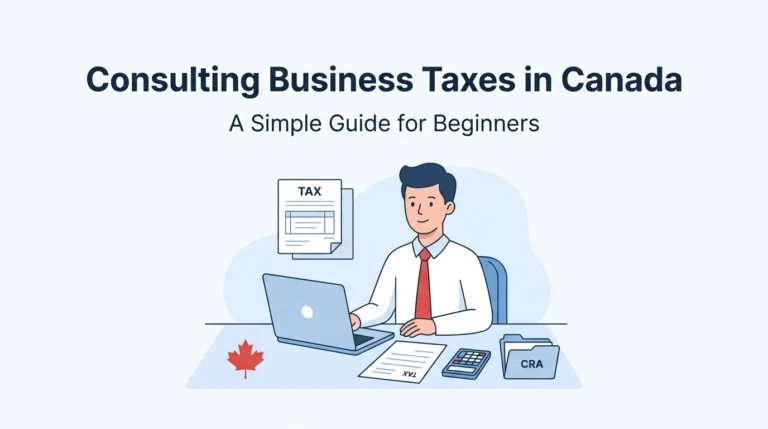
As a self-employed consultant, you’re responsible for paying your own income tax, and you’ll also be contributing to the Canada Pension Plan (CPP) on your own. If your annual revenue reaches $30,000, you’re required to register for and collect GST/HST from your clients as well.
The good news is that many of your business expenses are tax-deductible. Things like your home office, phone, software subscriptions, and professional development costs can all reduce your taxable income.
Staying organized from the start makes tax season much less stressful. Keep all your receipts, track every payment you receive, and consider working with an accountant even once a year at filing time.
For a proper beginner’s explanation of how consulting taxes work in Canada, read our full guide on consulting business taxes in Canada.
Legal Requirements for a Consulting Business in Canada
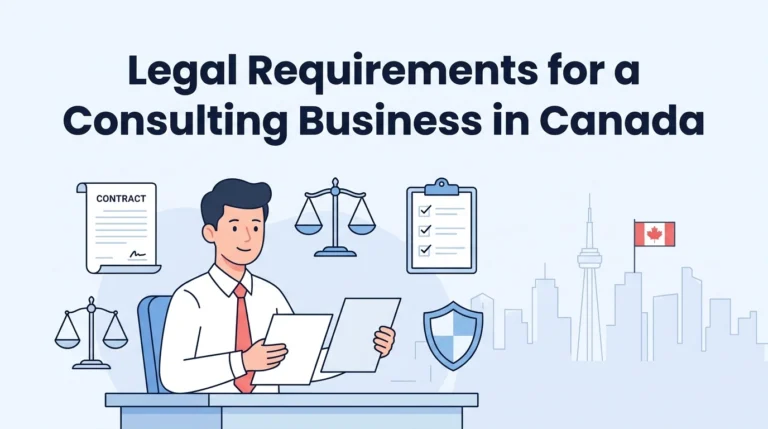
Canada doesn’t require a general business license for most types of consulting, but there are legal considerations you shouldn’t ignore.
The most important legal step is protecting yourself with solid client contracts. Every project you take on should have a written agreement that outlines what you’re delivering, the timeline, payment terms, and what happens if either party wants to end the arrangement. Skipping contracts is one of the most common and costly mistakes new consultants make.
Professional liability insurance (also called errors and omissions insurance) is worth considering early. It protects you if a client claims your advice caused them financial harm. Some clients especially larger organizations, will actually require you to carry it before signing a contract.
Depending on your niche, you may also need specific certifications or licenses. Financial advisors, for example, need to be registered with the appropriate regulatory body. Always check what applies to your specific area.
For a full overview of the legal side of setting up your business, read our article on the legal requirements for a consulting business in Canada.
Best Cities in Canada for Consultants
Where you live affects who you can work with, especially if you’re open to in-person client meetings or local networking. That said, most consulting happens remotely these days, so don’t feel stuck if you’re not in a major city.
Toronto and Ontario
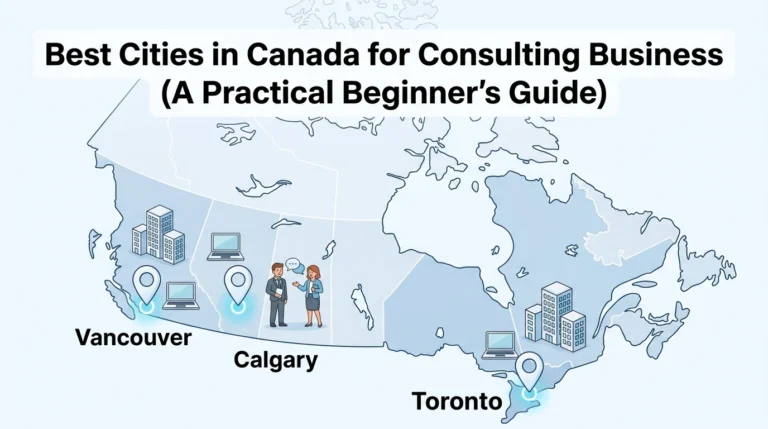
Toronto is the largest business hub in Canada and the natural starting point for anyone thinking about how to start a consulting business in Ontario. There’s demand for consultants across virtually every sector, from finance and tech to marketing and real estate. The networking opportunities are significant, and the client budgets tend to be higher. The competition is also stronger, which means your niche matters more.
Beyond Toronto, Ontario as a province offers significant opportunity. Cities like Ottawa, Hamilton, and Waterloo each have distinct business communities worth considering. Ottawa draws heavily on government and public sector consulting, while Waterloo’s tech corridor has produced strong demand for IT and startup-focused consultants.
Vancouver has a booming tech scene and a strong small business community. It’s also a gateway to international trade, particularly with Asia-Pacific markets. Consultants with expertise in sustainability, technology, or international business often do well here.
Calgary is the center of Canada’s energy sector, and there’s strong demand for consultants in oil and gas, project management, engineering, and business strategy. It also has a lower cost of doing business than Toronto or Vancouver, which helps with margins.
Other cities worth noting include Ottawa (government and public sector consulting), Montreal (bilingual market with a strong creative sector), and Halifax (growing tech community with lower overhead).
For a deeper look at where to set up and why location still matters even for remote consultants, read our article on the best cities in Canada for a consulting business.
Common Mistakes Beginners Make
Learning from others’ missteps can save you real time and money.
Undercharging early on: Many beginners set their rates too low out of fear that clients won’t pay more. Low rates attract difficult clients and make it hard to build a sustainable income. Research what consultants in your niche charge and price accordingly.
Not having a contract: Even with friends or warm referrals, always use a written agreement. It protects you and sets clear expectations for both sides.
Trying to find clients without a clear offer: “I’m a business consultant” tells people nothing. Be specific about who you help and what problem you solve.
Skipping the financial setup: Mixing personal and business money creates headaches at tax time and makes it hard to understand how your business is actually performing.
Waiting until everything is perfect: Many people spend months building a website, creating a logo, and polishing their brand before getting a single client. You only need to be good enough to help someone. Start there.
Tips for Long-Term Success as a Consultant in Canada
Getting your first client is one thing. Building a consulting business that lasts takes a different approach.
Keep your skills current. Consulting is built on expertise, and that expertise needs to stay relevant. Read industry news, take courses, attend events, and stay connected with people in your field.
Build genuine relationships. Most consulting business comes from referrals and repeat clients. Treat every engagement as a chance to make someone want to send others your way.
Track your numbers. Know how much you’re earning, what your expenses are, and which types of work are most profitable. This information will guide how you grow.
Don’t neglect marketing between projects. It’s easy to stop promoting yourself when you’re busy. But the pipeline dries up fast if you ignore it. Even small consistent efforts like posting on LinkedIn or staying in touch with past clients pay off over time.
Consider raising your rates as you gain experience. Your early rates were a starting point, not a ceiling. As you build a track record and reputation, your pricing should reflect that.
Conclusion
Learning how to start a consulting business in Canada doesn’t have to be complicated. The fundamentals are simpler than most people expect: pick a niche, register your business, understand your tax obligations, protect yourself legally, and focus on delivering real value to your clients.
The details matter, but they’re all learnable. And the good news is that consulting is one of the few business models where you can genuinely start small, build steadily, and grow at your own pace. If you like reading the basics of the consulting business, I prefer you read this: How to Start a Consulting Business.
Use this guide as your roadmap. Follow the links to the supporting articles when you’re ready to go deeper on any specific topic. And remember the best first step is simply getting started.
Do I need a license to start a consulting business in Canada?
Most types of consulting don’t require a license. However, some regulated fields like financial advising or healthcare consulting have specific licensing requirements. Always check the rules that apply to your particular area.
How much does it cost to start a consulting business in Canada?
Most consultants start for under $2,000. Basic startup costs include business registration, a website, and possibly insurance. Costs go up if you incorporate or hire help early.
Do I have to register my consulting business in Canada?
If you’re operating as a sole proprietor under your legal name, some provinces don’t require registration. But if you use a business name or plan to incorporate, you’ll need to register with your provincial or federal government.
When do I need to charge GST/HST as a consultant?
Once your annual revenue reaches $30,000, you’re required to register for a GST/HST account and charge it to your Canadian clients. Below that threshold, it’s optional but sometimes worth doing anyway.
Can I run a consulting business from home in Canada?
Yes, and many consultants do. You can deduct a portion of your home expenses as a business cost. Just make sure to keep records and follow CRA guidelines on home office deductions.
How do I find my first consulting client in Canada?
Start with your existing network. Tell former colleagues, friends, and industry contacts what you’re doing and who you help. Many consultants land their first project through a warm introduction rather than cold outreach.
How do I start a consulting business in Ontario specifically?
The process in Ontario follows the same broad steps as the rest of Canada, but with province-specific registration through the Ontario Business Registry. Sole proprietors using a business name register it online, while those incorporating can do so provincially or federally. Ontario’s large and varied economy means there’s genuine demand across most consulting niches, and the registration process itself is straightforward once you’ve settled on your business structure and name.
How do I become a consultant in Canada without formal credentials?
Credentials matter far less than most people expect. The majority of consulting fields in Canada are unregulated, which means your practical experience, the results you can demonstrate, and the clarity of your offer carry far more weight than any certificate or degree. Start by identifying a specific problem you know how to solve, find people who have that problem, and offer to help them. A track record of real results is the most convincing credential there is.
Are consultants in demand in Canada?
Yes. The post describes a healthy business environment for independent consultants: companies across industries, from tech to healthcare to real estate, regularly hire outside consultants instead of full-time staff because it saves money and gives access to specialized knowledge on demand. There is genuine demand for consulting services in almost every field, and remote work means a consultant based in one city can serve clients across the country. Demand is especially visible in areas like Calgary’s energy sector, Ottawa’s government and public sector, and environmental and sustainability consulting, which is growing fast with government and construction clients.