Cost to Start a Consulting Business in USA (A Real Beginner’s Breakdown)

Introduction
The cost to start a consulting business in USA is one of the lowest of any business type you could choose. Most new consultants get up and running for somewhere between $500 and $3,000, and some spend considerably less if they’re thoughtful about what they actually need versus what feels nice to have.
This guide breaks down exactly where that money goes, what you can hold off on, and where beginners tend to waste money before they’ve landed a single paying client. If you want the full picture of starting your consulting practice beyond the financial side, the main guide on how to start a consulting business in USA covers the complete roadmap.
Can You Start a Consulting Business in USA with a Low Budget?
Yes, and consulting is genuinely one of the best business models for people who want to start lean.
You’re selling knowledge and expertise, not physical products. There’s no inventory to buy, no equipment to lease, no storefront to maintain. Your biggest asset walks around with you. That means most of what you spend early on is optional, and the non-optional costs are modest.
The real investment in a consulting business is time to develop your expertise, time to build relationships, and time to earn a reputation with clients. None of that requires a large upfront budget.
That said, spending nothing isn’t realistic if you want to operate professionally. A few targeted investments in the right places make you look credible, stay organized, and protect yourself legally. The goal is to spend intentionally, not to avoid spending entirely.
Basic Startup Costs in USA
Before breaking things down by category, it helps to understand the difference between one-time costs and ongoing costs.
One-time costs are things you pay for once at the beginning of business registration, like a logo and an initial website build. Ongoing costs are things you pay for regularly, like software subscriptions, insurance premiums, web hosting, and accounting fees.
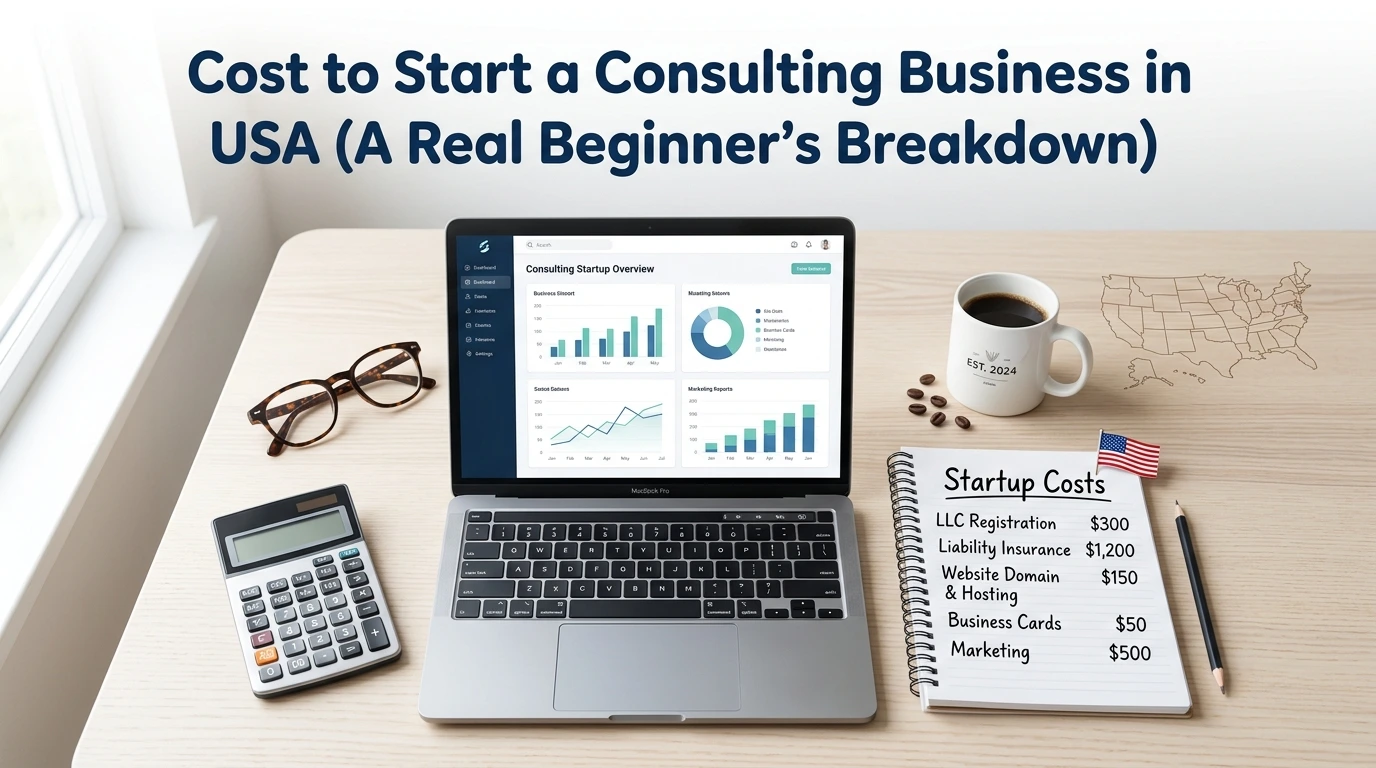
When people ask about the cost to start a consulting business in USA, they’re usually asking about that initial one-time investment. For most solo consultants, that number sits between $500 and $3,000, depending on the choices you make. Some niche choices like regulated fields that require licensing will push that number higher.
Here’s where the money actually goes.
Business Registration Costs
Your first real cost is usually getting the business officially set up.
If you’re operating as a sole proprietor under your own legal name, you may be able to start with zero registration costs in many states. But if you want a business name or the legal protection of an LLC, registration fees apply.
Filing a DBA (Doing Business As) to register a business name typically costs between $10 and $100 depending on your state and county.
Forming an LLC, which most consultants find worth doing for the liability protection, costs between $50 and $500 in filing fees depending on the state. Wyoming and New Mexico are among the cheapest. California charges $70 to file but also imposes an $800 annual minimum franchise tax, which is worth factoring into your decision. Texas charges $300 for LLC formation.
If you use an online formation service like ZenBusiness or Northwest Registered Agent to handle the paperwork, add another $50 to $200 on top of state fees. A registered agent service, which most states require for LLCs, typically costs $50 to $150 per year.
Getting an EIN from the IRS is free and takes about ten minutes online.
Website and Domain Costs
A professional website isn’t the first thing you need, but it’s something most consultants should have relatively early. It gives potential clients a place to learn about you, confirms you’re legitimate, and makes it easier for people to refer you.
A domain name, your web address, runs between $10 and $20 per year. There’s no reason to pay more than that.
Website hosting costs anywhere from $5 to $30 per month depending on the provider. Platforms like WordPress, Squarespace, and Wix make it possible to build a clean, professional site without technical skills. If you build it yourself using one of these tools, your first-year website cost might total $100 to $300 all in.
If you hire a freelance designer or developer, expect to pay $500 to $2,000 for a basic consulting website. Agency pricing runs higher. For a new consultant, a self-built site on a budget platform is more than sufficient. The goal is a clear, professional presence, not a complex custom build.
Marketing and Branding Costs
Marketing is where new consultants most commonly overspend before they have any income to justify it.
A basic logo is worth having. It makes your emails, proposals, and website look cohesive. Platforms like Fiverr or 99designs let you get a decent logo for $50 to $150 without commissioning expensive agency work. You don’t need a full brand identity package at this stage.
Business cards are largely optional today. Most consulting business happens online or over video calls. If you do networking events or in-person meetings regularly, a box of 250 cards from an online printer costs $20 to $40.
Paid advertising is something most new consultants should avoid until they have a proven offer and some client experience. The most effective early marketing is personal outreach, LinkedIn presence, and word of mouth, all of which cost nothing but your time.
If you want to invest in marketing early, spending on one or two quality photos for professional headshots is more useful than almost anything else at this stage. A clean professional photo costs $100 to $300 from a local photographer and gets used everywhere your website, LinkedIn, email signature, and proposals.
Software and Tools Costs
You’ll need a handful of tools to run your consulting business professionally. The good news is that most of them have solid free options that work well when you’re starting out.
Accounting software is worth paying for from the beginning. Keeping your income and expenses properly tracked saves enormous time at tax season and gives you a clear picture of your business finances. Wave is free and capable for solo consultants. QuickBooks Self-Employed and FreshBooks both cost around $15 to $30 per month and add useful features like invoicing, expense categorization, and tax estimates.
Video conferencing for client calls is covered for free by Zoom’s basic plan or Google Meet. You don’t need a paid tier when you’re starting out.
Project management tools like Trello, Asana, or Notion all have free plans that are more than adequate for managing client work solo.
For proposals and contracts, you can start with Google Docs or Word templates at no cost. As you scale, tools like Bonsai, HoneyBook, or PandaDoc handle proposals, contracts, and invoices in one place and cost $19 to $40 per month. These are worth considering once you’re sending proposals regularly.
Email marketing tools like Mailchimp have free tiers that work well until your list grows. You probably don’t need this at all in the first few months.
Realistically, your software costs in the first year, even if you pay for a few tools, might run $200 to $600.
Home Office vs Rented Office Costs
Working from home is the default for most new consultants, and it makes complete financial sense. The majority of consulting work today happens over video calls and email. A physical office isn’t necessary for most people starting out.
Working from home also comes with a tax benefit. The IRS allows self-employed individuals to deduct home office expenses if you use a dedicated space regularly and exclusively for work. You can deduct a portion of rent or mortgage interest, utilities, and internet based on the percentage of your home used for business. This reduces your taxable income meaningfully over the course of a year.
If you occasionally need a professional space for client meetings, coworking day passes in most US cities run $20 to $50. Pay only when you need it rather than committing to a monthly membership.
A dedicated private office in a major city like New York, San Francisco, or Chicago can cost $800 to $3,000 per month or more. For a solo consultant starting out, that’s an unnecessary cost that eats into your margin before you’ve built consistent revenue. Hold off until the client volume genuinely requires it.
Hidden Costs Beginners Forget
A few costs catch new consultants off guard because they’re not obvious until you’re already operating.
Professional liability insurance is the big one. Also called errors and omissions (E&O) insurance, it covers you if a client claims your advice caused them financial harm. Annual premiums for a solo consultant in the US typically run $500 to $1,500 depending on your niche and coverage level. Some clients, particularly larger organizations, require proof of insurance before signing a contract. Budget for this early.
Self-employment tax is not a hidden cost exactly, but it’s one that many new consultants dramatically underestimate. As a self-employed consultant, you pay 15.3 percent in self-employment tax on top of your regular income tax. This comes directly out of what your clients pay you. Setting aside 25 to 30 percent of every payment you receive specifically for taxes is a practical starting rule.
Continuing education and professional development are worth budgeting for. Staying current in your niche is part of what makes you worth hiring. Courses, books, certifications, and industry memberships are real expenses that add up annually.
Accounting and bookkeeping help at tax time typically costs $300 to $700 for a self-employed individual working with a CPA. If your business finances are clean and organized, this is money well spent for the peace of mind and potential deductions found.
Ways to Reduce Startup Costs
The most effective way to keep costs low is to start simple and add tools and expenses only when you genuinely need them.
Build your own website instead of hiring a designer. Use free software tiers before committing to paid plans. Work from home instead of renting office space. Use templates for contracts and proposals before investing in paid tools.
Buying annual subscriptions instead of month-to-month on software you know you’ll use consistently saves 20 to 40 percent on most platforms.
Focus early energy on getting clients through personal outreach rather than paid marketing. Every client you land through a conversation or referral costs you nothing financially.
And resist the urge to spend on branding and marketing before you’ve clearly defined who you serve and what problem you solve. Spending $1,000 on a logo and website before you have a clear offer is money that could have been your first month of accounting software, insurance, and registration fees instead.
Common Money Mistakes Beginners Make
Spending before earning is the most common pattern. New consultants invest in expensive branding, tools, and marketing materials before they’ve had a single client conversation. None of that generates revenue. The conversations do.
Underestimating taxes. This hits hard the first year. Self-employment taxes are significant, and if you haven’t set money aside throughout the year, the April bill is a shock. Build the habit of setting aside a tax reserve from your very first payment.
Skipping professional liability insurance. It feels like an unnecessary expense until you have a dispute with a client. The cost of one lawsuit, even a frivolous one you’d eventually win, far exceeds several years of insurance premiums.
Paying for premium software before the free tier runs out. Many new consultants upgrade to paid plans before they’ve actually hit the limits of the free version. Use the free version until it genuinely no longer covers your needs.
Mixing personal and business finances. This creates a messy financial picture and makes tax time much harder than it needs to be. Open a business bank account before you receive your first payment.
Tips Before Spending Money on Your Consulting Business
Before you open your wallet on anything, ask yourself honestly: Do I need this to get my first client, or am I buying it to feel more ready?
Most purchases that happen before a consultant lands their first client are about feeling ready, not being ready. A client doesn’t care about your logo. They care whether you can solve their problem.
Make a list of everything you’re considering buying and split it into two columns: things you need to operate professionally and things you can add later once income is coming in. Then only buy the first column.
Talk to other consultants in your field before making larger purchases. Ask what they actually use day-to-day and what they wish they’d skipped early on. Real experience is more reliable than product websites.
Conclusion
The cost to start a consulting business in USA is genuinely low compared to almost any other business you could launch. Your biggest investment is your time and expertise, not your bank account.
Spend carefully on the essentials: business registration, a simple website, basic tools to stay organized, and insurance once you’re ready to work with clients. Hold off on everything else until revenue makes additional investment clearly worthwhile.
For the full roadmap of starting and growing your consulting practice from picking a niche to registering your business, understanding taxes, and landing clients, the main guide on how to start a consulting business in USA has everything in one place.
FAQs
How much does it cost to start a consulting business in the USA?
Most new consultants spend between $500 and $3,000 to get started. Main costs include business registration, a basic website, software tools, and professional liability insurance. Some consultants start for well under $500.
Can I start a consulting business in the USA with no money?
Nearly, yes. If you operate as a sole proprietor under your own legal name, you can start with minimal costs — mainly just a laptop and internet connection. A small investment in a website and insurance is worth it, but the startup bar is very low.
What is the biggest hidden cost for new consultants in the USA?
Self-employment tax tends to surprise people most. You pay 15.3 percent on net self-employment income on top of regular income tax. Setting aside 25 to 30 percent of every client payment for taxes from day one prevents a painful April surprise.
Do I need to rent an office to start a consulting business in the USA?
No. Most consulting work happens remotely, and working from home is completely professional. You may also be able to deduct home office expenses, which reduces your taxable income.
What software do I actually need to start a consulting business in the USA?
At a minimum, you need accounting software to track income and expenses (Wave is free), a video conferencing tool (Zoom or Google Meet free tier), and a document tool for proposals and contracts (Google Docs works fine to start). Everything else can be added when you genuinely need it.
Is professional liability insurance required for consultants in the USA?
It’s not legally required for most consulting niches, but many corporate clients require proof of coverage before signing a contract. Annual premiums for solo consultants typically run $500 to $1,500, and the protection is well worth the cost.