
How to Start a Consulting Business in USA (Complete Beginner’s Guide)

Introduction
Starting a consulting business in the USA is one of the most accessible paths to self-employment available today. You don’t need investors, a large team, or a physical storefront. What you need is a skill that solves a real problem, a basic understanding of how to set up a business properly, and the willingness to go find clients.
This guide walks you through the full roadmap from choosing your niche to registering your business, understanding your taxes, and building something that lasts. If you’ve been thinking about how to start a consulting business in USA but weren’t sure where to begin, this is that starting point.
Why the USA Is a Strong Place to Start a Consulting Business
The US market is one of the most consulting-friendly in the world. American businesses from small startups to Fortune 500 companies have a long tradition of hiring outside experts rather than keeping every function in-house. That creates a consistent, widespread demand for consultants across virtually every industry.
The size of the market works in your favor too. There are millions of small and mid-sized businesses across the country, and many of them regularly need outside guidance on marketing, operations, finance, human resources, technology, and strategy. You don’t need to land big corporate contracts to build a profitable practice; the small- and mid-market segment alone is enormous.
The US also has a business culture that genuinely respects expertise. If you can demonstrate that you know your field and deliver results, clients will pay well for that. Consulting rates in the US tend to be higher than in most other countries, which means the income potential is real even when you’re just starting out.
Add to that a relatively straightforward business registration process, a large pool of potential clients you can reach online, and a strong freelance and independent contractor culture and you have a genuinely accessible environment for new consultants.
Can Beginners Start a Consulting Business in USA?
Yes, and the barrier to entry is lower than most people think.
You don’t need a business degree, a corporate background, or years of management experience. What matters is having a specific skill or area of knowledge that helps a specific group of people solve a specific problem. That sounds simple, and it is.
Think about what you’ve spent time learning, doing, or building expertise in. Maybe it’s social media marketing, bookkeeping, HR policy, web design, sales strategy, supply chain operations, or executive coaching. Any of those can become a consulting service if there’s a group of people willing to pay for it.
Many successful US consultants started part-time picking up one or two clients while still employed and transitioned to full-time once the income was consistent and the confidence was there. That’s a sensible path, and it reduces the financial pressure of starting something new.
Types of Consulting Businesses in USA
The consulting industry in the US covers a wide range of fields. Some of the most common types include:
Management and business strategy consulting, where consultants help companies improve how they operate, make decisions, or grow. Marketing and communications consulting, which covers everything from brand strategy to digital advertising to public relations. Financial consulting for individuals or businesses, including budgeting, investment advisory, and financial planning. Some areas of this require licensing. HR consulting, which helps organizations with hiring, workplace culture, benefits, and employment law compliance.
IT and technology consulting is one of the fastest-growing areas, covering software selection, cybersecurity, systems architecture, and digital operations. Legal consulting typically requires a law license, but some forms, like contract review or compliance advisory, operate in adjacent spaces. Environmental and sustainability consulting, which is growing with the expansion of ESG requirements and climate-related regulations.
These are just the more common categories. The reality is that consulting is less an industry and more a way of working, and it applies to almost any professional field.
Choosing a Consulting Niche
Trying to serve everyone is the fastest way to attract no one. The consultants who grow the quickest are usually the ones who pick a clear, specific niche and become known for it.
Your niche is where three things overlap: what you’re genuinely good at, what a specific group of people actually need help with, and what they’re willing to pay for. Finding that intersection takes some honest reflection, but it’s worth spending real time on before you start marketing yourself.
A good niche is specific enough to be memorable but broad enough to have real demand. “HR consultant” is broad. “HR consultant for small manufacturing companies” is specific. The second one is easier to market, easier to build a reputation in, and more likely to generate referrals because people know exactly who to send your way.
Your niche doesn’t have to be permanent. Start focused, build a track record, and let your niche evolve naturally as you learn more about what your clients actually need.
Step-by-Step Process to Start a Consulting Business in USA
Here’s the practical roadmap, briefly. Each step gets covered in more depth in the sections and supporting articles below.
Step 1: Define your niche and target client: Know who you help and what problem you solve before anything else.
Step 2: Choose your business structure: Most solo consultants start as a sole proprietor or form an LLC. This affects your taxes and personal liability.
Step 3: Register your business: Requirements vary by state. Some structures require formal registration; others don’t.
Step 4: Set up your finances: Open a dedicated business bank account and set up a basic system to track income and expenses.
Step 5: Understand your tax obligations: Self-employed consultants in the US handle their taxes differently than employees. More on this below.
Step 6: Get your first clients: Start with your existing network, be clear about what you offer, and follow up consistently.
Step 7: Deliver excellent work and build your reputation: Referrals and repeat clients are the lifeblood of most consulting businesses.
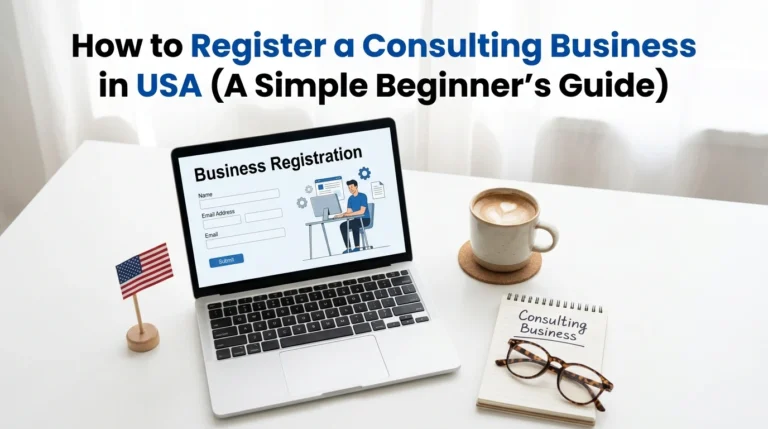
Business Registration in USA
Before you can officially operate as a consulting business in the US, you need to decide on a structure and register appropriately.
Most beginners choose between two options: operating as a sole proprietor or forming a limited liability company (LLC). A sole proprietorship is the simplest path. In many cases, you can start immediately without any formal registration, especially if you operate under your own name. An LLC creates a separate legal entity that protects your personal assets if something goes wrong with a client, and it’s relatively easy and inexpensive to form.
Registration requirements and fees vary significantly by state. Some states charge as little as $50 to form an LLC; others charge several hundred dollars. You may also need to register a DBA (Doing Business As) name if you’re operating under a business name rather than your own legal name. And depending on your location and niche, you might need a local business license or permit.
The registration side of things has a lot of moving parts depending on where you live and how you want to structure the business. For the full step-by-step breakdown, read our guide on how to register a consulting business in USA.
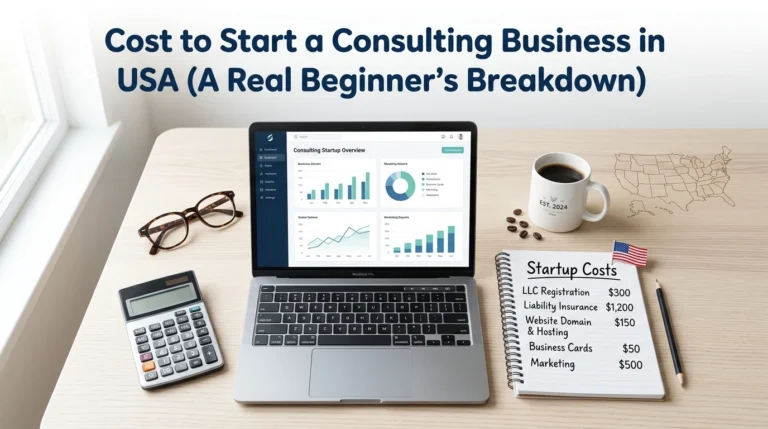
Cost to Start a Consulting Business in USA
One of the most appealing things about consulting as a business model is how low the startup costs are compared to almost any other type of business. You’re selling knowledge and expertise, not physical products, so there’s no inventory, no warehouse, and no expensive equipment required.
That said, there are real costs to plan for. Business registration and LLC formation can run anywhere from $50 to a few hundred dollars depending on your state. A professional website typically costs between $100 and $500 to build yourself, or more if you hire a designer. Professional liability insurance, which protects you if a client claims your advice caused financial harm, is worth budgeting for, and costs vary by field and coverage level. Basic accounting software, a domain name, and perhaps some marketing materials round out the typical early expenses.
Most consultants in the US get started for somewhere between $500 and $3,000 total. Some spend less if they’re resourceful about what they DIY.
For a detailed breakdown of one-time versus ongoing costs, read our full guide on the cost to start a consulting business in USA.
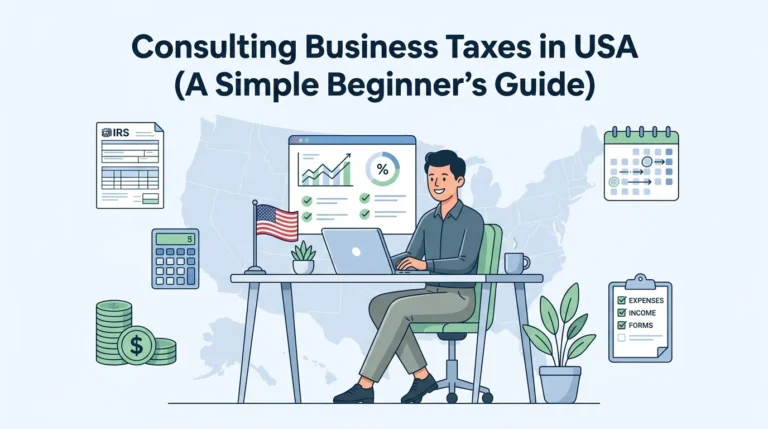
Consulting Business Taxes in USA
Taxes are the area where most new consultants get surprised, usually because they’ve spent their whole careers as employees where everything was handled automatically.
As a self-employed consultant in the US, you’re responsible for paying your own income taxes. You’ll also pay self-employment tax, which covers Social Security and Medicare at a combined rate of 15.3 percent on your net self-employment income. There’s no employer covering half of that anymore. It all comes out of what your clients pay you.
Because nothing is withheld from your consulting payments, the IRS expects you to pay estimated quarterly taxes throughout the year in April, June, September, and January. Missing these payments results in penalties and a larger-than-expected bill in April.
The good news is that most of your genuine business expenses are deductible. Home office costs, software, professional development, health insurance premiums, and travel related to client work can all reduce your taxable income. Keeping clean records makes claiming these deductions straightforward.
For a complete beginner’s explanation of how US consulting taxes work, read our guide on consulting business taxes in USA.
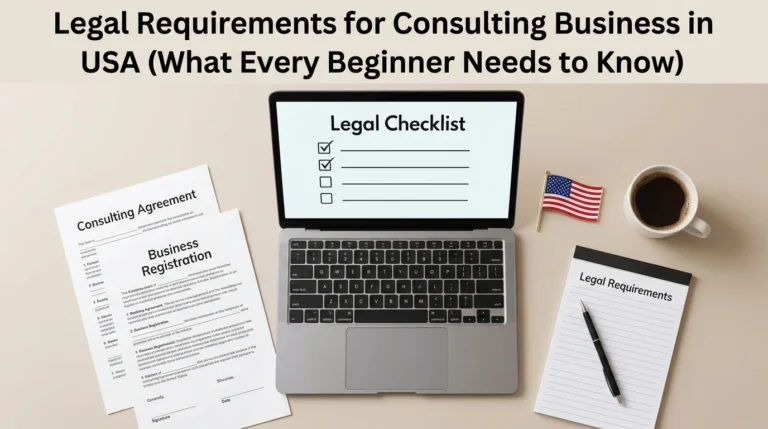
Legal Requirements in USA
The legal side of starting a consulting business in the US is manageable, but there are things you genuinely should not skip.
Client contracts are the most important. Every project you take on should have a written agreement that clearly defines what you’re delivering, the timeline, how and when you get paid, what happens if scope changes, and what either party’s rights are if the engagement ends early. Consulting without contracts is one of the most common and costly mistakes new consultants make.
Professional liability insurance is the next priority. If a client claims your advice led to financial losses, you want coverage in place. Many corporate clients will actually require proof of insurance before signing a contract with you.
Depending on your niche, there may also be specific licensing or certification requirements. Financial advisors, healthcare consultants, and certain types of legal consultants need to be properly registered or licensed with the relevant regulatory bodies. Check what applies to your field before you start working with clients.
For the complete picture of what the law requires and how to protect yourself properly, read our guide on the legal requirements for a consulting business in USA.
Best Cities in USA for Consultants
Location matters even in an age of remote work. Where you’re based shapes your networking opportunities, the types of clients you can access locally, and the cost structure you’re working within. Here’s a brief overview of some of the strongest markets.
New York is the largest business hub in the country with the deepest concentration of corporate clients across finance, media, technology, and professional services. The competition is real, but so is the demand. Consultants who can clearly communicate their value find a market with high client budgets and consistent work.
Texas, particularly Dallas, Houston, and Austin, has emerged as one of the strongest consulting markets in the country. The tech sector in Austin has exploded, Dallas has a large corporate presence across multiple industries, and Houston remains the center of the energy sector. The cost of doing business is lower than the coastal cities, and the market is growing fast.
California covers multiple distinct markets. San Francisco and Silicon Valley are the obvious hubs for technology consulting. Los Angeles is strong for media, entertainment, and creative industries. San Diego has a significant biotech and defense presence. The cost of living is high across the state, but so are the client budgets.
Florida, especially Miami, Tampa, and Orlando, has seen significant business migration and growth over the past few years. Miami, in particular, has developed into a serious financial and technology hub, drawing companies and capital that previously concentrated in New York. Florida’s low tax environment makes it attractive for both consultants and the clients they serve.
For a deeper comparison of these markets and others worth considering, read our guide on the best cities in USA for consulting business.
Common Mistakes Beginners Make
Undercharging is the most widespread mistake. New consultants set their rates too low out of self-doubt or fear of rejection, which attracts clients who are difficult to work with and makes it nearly impossible to build a sustainable income. Research market rates in your niche and price within a reasonable range from the start.
Not having a written contract is close behind. Even when working with people you know personally, a contract protects both parties and sets clear expectations. Without one, disputes over deliverables or payment have no clear resolution.
Trying to find clients without a clear offer is another one. Saying “I’m a business consultant” tells nobody anything. Knowing exactly who you help and what you help them do and being able to say it clearly in one sentence is what actually generates interest.
Waiting until everything is perfect before starting. A lot of people spend months building a website, designing a logo, and preparing marketing materials before ever speaking to a potential client. None of that generates revenue. A clear offer and one conversation with the right person will do more for your business than a perfect website.
Mixing personal and business money creates problems at tax time and makes it hard to understand your actual business performance. Open a business bank account from day one.
Tips for Long-Term Success
Stay sharp in your field. Consulting is built on expertise, and expertise gets stale if you don’t work at it. Read, take courses, attend industry events, and stay connected to what’s changing in your niche.
Ask for referrals deliberately. Most consulting business comes from relationships and word of mouth, but it doesn’t happen passively. After a successful project, ask your client directly if they know anyone else who might benefit from similar help.
Keep marketing even when you’re busy. The pipeline dries up faster than most people expect when you stop nurturing it. Even small consistent efforts, a LinkedIn post, a follow-up email, and a check-in with a past client compound over time.
Track your numbers. Know what you’re earning, what you’re spending, which clients are most profitable, and which types of work generate the best results. This information helps you make better decisions about where to focus your energy as you grow.
Raise your rates as your experience grows. Your early rates were a starting point. As your track record builds and the quality of your work becomes more consistent, your pricing should reflect that.
Conclusion
Learning how to start a consulting business in USA comes down to a handful of decisions made clearly and in the right order: pick a niche, set up your business properly, understand your financial obligations, protect yourself legally, and focus on delivering real value to clients.
None of it is complicated once you break it down. The roadmap is clear, the barriers are low, and the market is large. What most people who want to start a consulting business in the USA actually need is a starting point and a plan, which is exactly what this guide is meant to be.
Use the supporting articles linked throughout to go deeper on any topic that feels unclear. And take the first real step define who you help and what problem you solve before you do anything else.
FAQs
Do I need a license to start a consulting business in the USA?
Most general consulting businesses don’t require a license. However, certain regulated fields, financial advising, healthcare consulting, and legal advisory, have specific licensing requirements. Check what applies to your particular niche.
How much does it cost to start a consulting business in the USA?
Most consultants get started for between $500 and $3,000. Main costs include business registration, a basic website, and professional liability insurance. Costs vary depending on your state and business structure.
What business structure should I choose for a consulting business in the USA?
Most solo consultants start as a sole proprietor or form an LLC. An LLC provides personal liability protection and is relatively inexpensive to set up. The right choice depends on your income level and risk tolerance.
Do I need to pay quarterly taxes as a consultant in the USA?
Yes. The IRS requires self-employed individuals to make estimated tax payments quarterly if they expect to owe $1,000 or more in taxes for the year. Missing payments results in penalties.
Can I start a consulting business in the USA from home?
Yes. Most consulting work happens remotely, and a home office is a perfectly professional setup. You may also be able to deduct a portion of your home expenses as a business cost.
How do I find my first consulting clients in the USA?
Start with your existing professional network. Tell former colleagues, contacts, and connections what you’re doing and who you help. Most first consulting clients come through a warm introduction or referral, not cold outreach.