How to Register a Consulting Business in USA (A Simple Beginner’s Guide)

Introduction
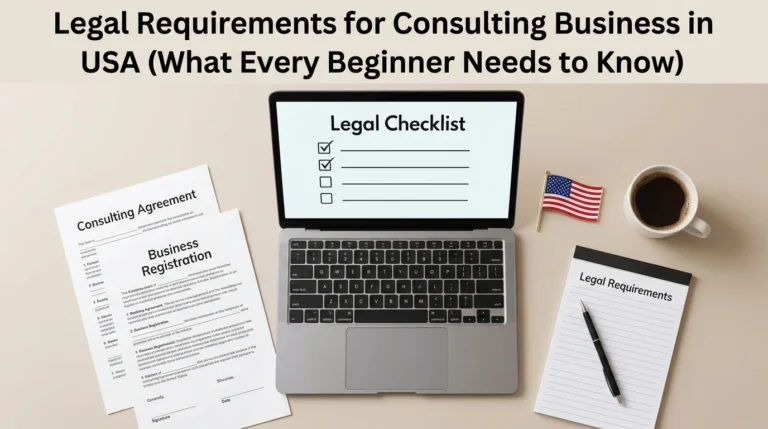
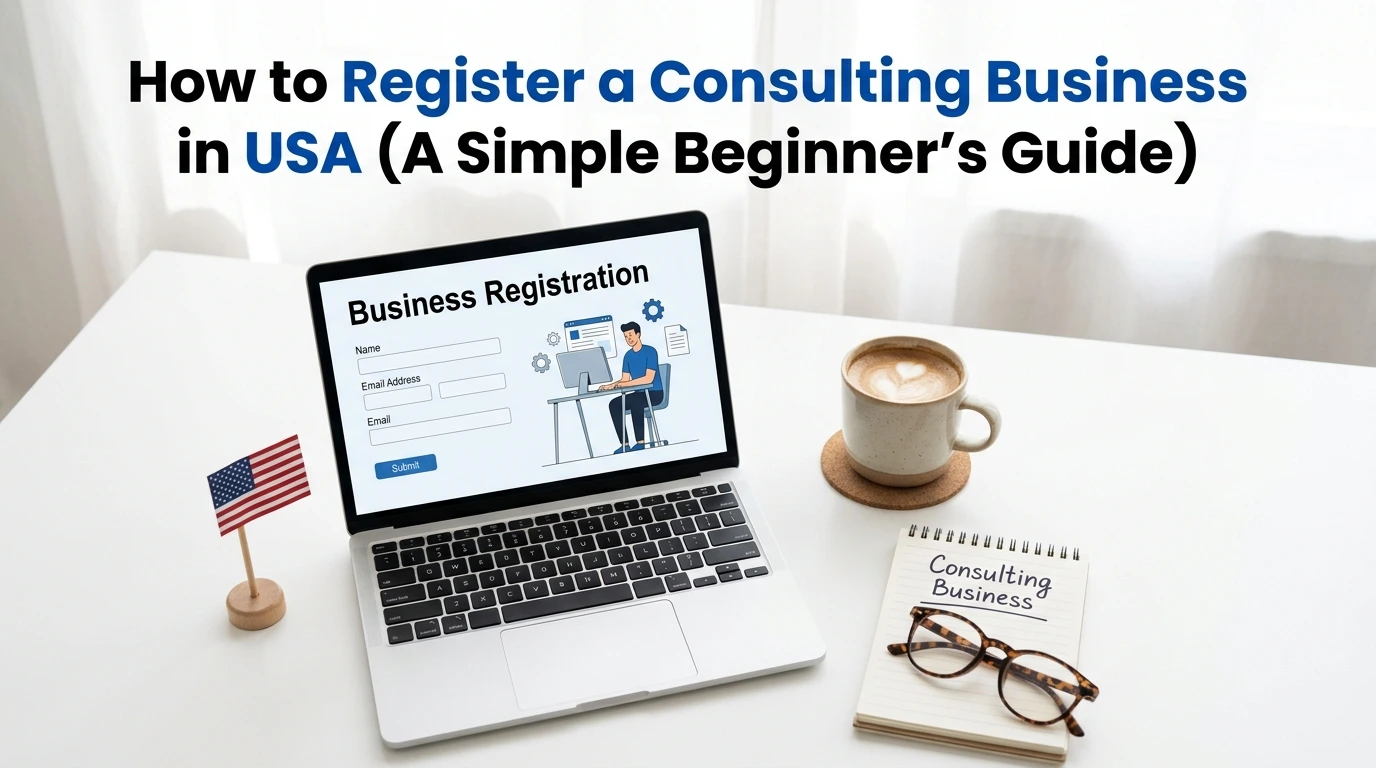
If you’re trying to figure out how to register a consulting business in USA, the process is more straightforward than most people expect. The steps vary slightly depending on your state and the business structure you choose, but the core path is the same for most new consultants: pick a structure, choose a name, file the right paperwork, and get your tax identification sorted.
This guide walks through each step clearly so you know exactly what to do, what it costs, and what to watch out for along the way. If you want the full picture of setting up your consulting practice beyond just the registration side, the main guide on how to start a consulting business in USA covers everything from choosing your niche to finding clients.
Do You Need to Register a Consulting Business in USA?
This depends on how you plan to operate.
If you’re a sole proprietor working under your own legal name, say your full name is James Miller and your business is just “James Miller” you can often start consulting without any formal registration in most states. You’re legally allowed to operate and invoice clients under your own name without additional paperwork.
But if you want to use a business name other than your legal name, you’ll need to register that name with your state. This is called a DBA, which stands for “Doing Business As.” It lets you operate under a business name legally and open a business bank account in that name.
If you form an LLC or corporation, registration is required regardless of what name you use. And once you start earning income as a self-employed consultant, you’ll also have tax registration requirements with the IRS and potentially your state tax authority.
So while it’s technically possible to start consulting with zero registration in a few situations, most new consultants should register both to protect themselves and to operate professionally.
Types of Business Structures in USA
Choosing the right structure is the most important decision in the registration process. It determines your legal liability, how you’re taxed, and how much administrative work you take on.
Sole Proprietorship
A sole proprietorship is the simplest structure. You and the business are the same legal entity; there’s no separation between your personal finances and your business finances. You report business income on your personal tax return, and there’s often no formal registration required unless you’re using a business name.
The downside is that you carry full personal liability. If a client sues you, your personal assets could be at risk. For this reason, many consultants eventually move away from sole proprietorship as their income grows.
LLC
A limited liability company is the most popular structure for independent consultants in the US, and for good reason. It creates a legal separation between you and the business, which means your personal assets are generally protected if something goes wrong with a client.
Setting up an LLC for consulting is one of the most common paths new consultants take precisely because of this flexibility. You get the liability protection of a formal business entity without the administrative burden of a full corporation.
Forming an LLC requires filing articles of organization with your state and paying a registration fee. The process is manageable to do yourself, and the protection it provides is well worth the modest cost.
Corporation
A corporation is a more formal and complex structure. It creates a fully separate legal entity with its own tax obligations, required meetings, corporate records, and compliance requirements. There are two main types: a C-corp and an S-corp, each with different tax treatments.
Most solo consultants don’t incorporate as a C-corp or S-corp when starting out. It adds layers of complexity that aren’t justified until your income is substantial and you’ve gotten proper tax advice about whether the structure makes sense for your situation.
Choosing a Business Name in USA
If you’re going to operate under a name other than your own, you need to make sure that name is available and properly registered.
Start with a name search through your state’s business registry. Most states have a free online search tool where you can check whether a name is already taken. Your chosen name can’t be identical or confusingly similar to an existing registered business in your state.
It’s also worth doing a basic trademark search through the US Patent and Trademark Office (USPTO) website. If someone has a federal trademark on a name and you start using it, you could face legal issues even if the state registry shows it as available.
Once you’ve confirmed the name is clear, also check whether the matching domain name is available online. You may not build a website immediately, but owning your domain from the start is cheap and worth doing.
Good consulting business names are specific enough to communicate something about what you do, easy to spell, and easy to remember. Avoid names that are too generic or too abstract; they’re harder to build a brand around.
Step-by-Step Process to Register a Consulting Business in USA
Here’s how the process works for most new consultants.
Step 1: Choose your business structure. Decide whether you’re going with a sole proprietorship, LLC, or corporation before you do anything else. Most consultants starting out choose sole proprietorship or LLC.
Step 2: Choose and verify your business name. Search your state registry to confirm the name is available. Check the USPTO for trademarks and verify the domain is open.
Step 3: File your formation documents. For an LLC, setting up an LLC for consulting means filing articles of organization with your state’s secretary of state office. The form is short, and the process is manageable to complete yourself online.
Step 4: Pay the filing fee. Fees vary by state and structure. LLC formation fees range from about $50 to $500 depending on where you live.
Step 5: Create an operating agreement (for LLCs). This internal document outlines how the LLC is managed. It’s not always legally required, but it’s strongly recommended, especially if you ever need to open a business bank account or work with an investor.
Step 6: Get your EIN. An Employer Identification Number is your business’s tax ID. More on this below.
Step 7: Open a business bank account. Once you have your EIN and registration documents, open a dedicated business account. This is one of the most important practical steps for keeping your finances organized.
EIN and Tax Registration Basics
An EIN, or Employer Identification Number, is a nine-digit number issued by the IRS to identify your business for tax purposes. Think of it as a Social Security number for your business.
If you form an LLC or corporation, you’ll need an EIN. Sole proprietors without employees can sometimes use their Social Security number instead, but getting an EIN is still recommended because it keeps your personal SSN out of the paperwork you share with clients and banks.
Applying for an EIN is free and can be done online through the IRS website in about ten minutes. You’ll receive your number immediately after completing the application.
Depending on your state, you may also need to register with your state’s department of revenue or taxation for state income tax and sales tax purposes. Most consulting services aren’t subject to sales tax, but this varies by state and is worth confirming.
Business Licenses and Permits
Most general consulting businesses in the US don’t require a specific professional license to operate. Unlike contractors, healthcare providers, or financial advisors, a business strategy or marketing consultant typically doesn’t need government approval to practice.
That said, there are two things worth checking.
First, your city or county may require a general business license for any business operating locally, including home-based businesses. The fee is usually small ($25 to $100 per year in most places), but operating without one when it’s required can lead to fines. Check your local city or county government website.
Second, if your consulting work touches a regulated field (financial planning, investment advice, healthcare, law), you may need specific professional registration or licensure. Research the requirements for your particular niche before you start working with clients.
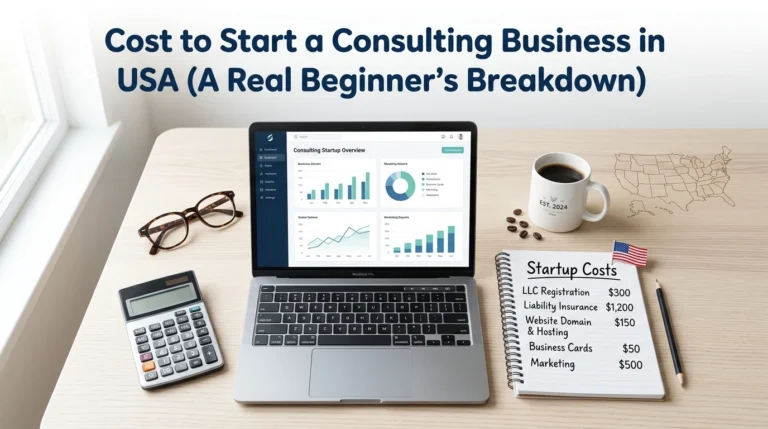
Registration Costs in USA
The cost to register a consulting business in the USA is generally low, especially at the sole proprietor level.
Filing a DBA in most states or counties costs between $10 and $100. LLC formation fees vary significantly by state Wyoming and New Mexico are among the cheapest at around $50 to $100, while Massachusetts and California charge significantly more. California, for example, has an $800 annual minimum franchise tax on LLCs regardless of income, which is worth knowing before you form one there.
Federal EIN registration is free through the IRS website. Many states also offer online registration portals where you can complete the whole process yourself without hiring anyone.
If you choose to use a registered agent service (required in most states for LLCs, a registered agent receives official legal documents on your behalf), that service typically costs $50 to $150 per year.
Online Registration vs Hiring a Service
For a basic sole proprietorship DBA registration or a straightforward single-member LLC, doing it yourself online is completely manageable. Most state websites have clear instructions, and the whole process can be completed in an hour or two.
If the process feels confusing, or if you want guidance on which structure is right for your situation, there are legitimate online formation services like ZenBusiness, Northwest Registered Agent, and similar companies that walk you through the process for a flat fee. These services typically cost $50 to $200 on top of state filing fees.
Hiring a business attorney is the highest-cost option but makes sense if you’re incorporating, setting up a multi-member LLC, or have complex circumstances. For most solo consultants starting a straightforward consulting practice, it’s not necessary.
Common Registration Mistakes Beginners Make
Skipping the name search is a common one. People get attached to a name, build a brand around it, and then find out it’s already taken or trademarked. Always verify before you commit.
Forming an LLC in a state other than where you live is something you’ll see marketed online. States like Delaware and Wyoming are often promoted as ideal for their favorable laws. In reality, if you live and work in a different state, you’ll still need to register as a “foreign LLC” in your home state and pay fees in both. For most solo consultants, forming in your home state is simpler and often cheaper.
Not getting an operating agreement for your LLC. It feels like extra paperwork, but it protects you and is often required by banks when opening a business account.
Missing local license requirements. People research state-level registration carefully and completely overlook the city or county business license requirement that’s sitting one level below.
Tips Before Registering Your Consulting Business
Before you start any paperwork, write down your business name with two or three alternatives in case your first choice isn’t available. Having backup options ready saves time and prevents delays.
Confirm your state’s specific requirements before you begin. Every state has its own process, fees, and rules. Spending 20 minutes reading your state’s Secretary of State website is worth more than reading any general guide.
Set up a dedicated business bank account as soon as your registration is complete. Mixing business and personal money creates accounting headaches and muddies your financial picture, especially at tax time.
And if you’re unsure whether to start as a sole proprietor or an LLC, talk to an accountant or attorney before you file. The difference in cost is modest, but the difference in legal protection and tax implications is real.
Conclusion
Knowing how to register a consulting business in USA is the first real administrative step toward making your practice official. For most people, it comes down to choosing a structure, verifying a name, filing a short form, and getting an EIN. The whole thing can be done online in a few hours.
What matters most is making the right structural choice early on and setting your business up cleanly from the start: separate finances, proper registration, and documentation in place before you start signing client contracts.
Once registration is handled, the next step is understanding the full landscape of running and growing a consulting practice. The main guide on how to start a consulting business in USA covers everything else: taxes, legal protections, startup costs, and how to find your first clients.
FAQs
Do I need to register my consulting business if I work alone in the USA?
If you work under your own legal name as a sole proprietor, many states don’t require formal registration. But if you use a business name, you’ll need to register a DBA, and if you form an LLC, registration is always required.
What is the difference between a sole proprietorship and an LLC for a consulting business?
A sole proprietorship is simpler but offers no personal liability protection. An LLC separates your personal assets from business liabilities, meaning you’re generally protected if a client sues the business.
How much does it cost to register a consulting business in the USA?
DBA filings typically cost $10 to $100. LLC formation fees range from about $50 to $500 depending on your state. Federal EIN registration with the IRS is free.
How do I get an EIN for my consulting business?
Apply online through the IRS website at irs.gov. The process takes about ten minutes, and you receive your EIN immediately after completing the application at no cost.
Do you need a business license to be a consultant in the United States?
Most general consulting businesses don’t need a specific professional license. However, some cities and counties require a general business license for any local business operation. Check your local government’s requirements.
Should I form my LLC in Delaware or Wyoming even if I don’t live there?
For most solo consultants, no. While those states have favorable laws, you’d still need to register as a foreign LLC in your home state and pay fees in both. Forming in your home state is usually simpler and more cost-effective.
What are the tax implications of LLC setup for a consultant?
When you set up an LLC as a consultant, the default tax treatment for a single-member LLC is pass-through taxation your business income flows through to your personal tax return, and you pay self-employment tax on it, just as you would as a sole proprietor. The difference is that as your consulting income grows, you can elect S-corp tax treatment for your LLC, which allows you to split your income between a salary and distributions and potentially reduce your self-employment tax burden. This is one of the most common reasons consultants revisit their LLC setup with a tax advisor once their earnings reach a higher level. It’s worth discussing with an accountant before you file, not after.